The Ooni Karu 16 used to be Ooni’s top large multi-fuel pizza oven. And after using it for plenty of family pizza nights, entertaining, and cooking things other than pizza, I can honestly say it’s one of my favorite Ooni ovens to cook on.
But the buying decision has changed.
For US buyers, the Karu 16 is no longer the current model in Ooni’s lineup. The closest current replacement is the Ooni Karu 2 Pro, which follows the same large multi-fuel idea but adds newer features like Ooni Connect and an updated glass door design.
So, this review is still useful if you’re looking at a second-hand Karu 16, buying in a region where it’s still available, or trying to decide whether the newer Karu 2 Pro is the better choice.
I’ve cooked a lot on the Karu 16, so this review focuses on what it’s actually like to use: the fuel options, how much work the fire takes, how the pizza turns out, what else you can cook in it, and whether this big multi-fuel Ooni is still worth considering.
Burning Brisket is reader-supported. When you buy through links on our site, we may earn an affiliate commission. Read our affiliate policy to learn more.
Table of Contents
Quick Verdict
The Ooni Karu 16 is a brilliant large multi-fuel pizza oven if you want proper wood-fired cooking, enough room for family-sized pizzas, and the flexibility to cook with wood, charcoal, or gas with the optional burner.
I love the pizza it makes. The base comes out light and crisp without turning cracker-like, the toppings cook properly, the cheese melts beautifully, and the 16-inch size makes family pizza nights much easier than cooking a heap of smaller pizzas.
But for most US buyers shopping new, I’d now look at the Karu 2 Pro first. The Karu 16 is still absolutely worth considering if you find one second-hand, heavily discounted, or you’re in a region where it’s still being sold.
Choose Ooni Karu 16 if:
- You found one at a good price
- You want real wood-fired pizza
- You cook for family or groups
- You want wood, charcoal, and gas
- You want a backyard oven setup
Skip Ooni Karu 16 if:
- You’re buying new in the USA
- You want the newest Karu model
- You only plan to cook with gas
- You need something portable
- You don’t want to manage fire
Also available at: Amazon
Is the Ooni Karu 16 Still Available?
The Ooni Karu 16 is no longer the current large Karu model in Ooni’s US lineup. The closest current replacement is the Ooni Karu 2 Pro.
Availability does vary by country, so you may still see the Karu 16 for sale outside the USA.
The main thing to know is this: if you’re shopping new in the USA, I’d look at the Karu 2 Pro first. But if you find a Karu 16 second-hand, discounted, or still available where you live, this review is still useful because the core large multi-fuel Karu cooking experience is very similar.
Ooni Karu 16 vs Karu 2 Pro: What Changed?
The Karu 2 Pro is the newer model and the one most US buyers should compare against the Karu 16 now.
I haven’t personally cooked on the Karu 2 Pro yet, so I’m not going to pretend this is a direct cooking comparison. But it is the closest current replacement, and it follows the same large multi-fuel Karu-style setup.
| Feature | Ooni Karu 16 | Ooni Karu 2 Pro |
|---|---|---|
| Current US model? | No longer the current US model | Yes |
| Cooking size | Cooks up to 16-inch pizzas | Cooks up to 16-inch pizzas |
| Fuel options | Wood, charcoal, gas with separate burner | Wood, charcoal, gas with separate burner |
| Door | Hinged glass ViewFlame door | Updated ClearView glass door |
| Temperature feedback | Built-in digital thermometer | Ooni Connect digital temperature hub |
| Best for | Used, discounted, or regionally available buys | Most US buyers shopping new |
The biggest buying decision is not really whether the Karu 16 was good. It was.
The question is whether it makes sense to buy the older model when the Karu 2 Pro is now the current option in the USA.
For most people buying new, I’d go Karu 2 Pro.
For someone who finds a Karu 16 second-hand or at a decent discount, I’d still be very happy with the older oven. It cooks incredible pizza, has the fuel flexibility that makes the Karu range so useful, and the glass door plus built-in temperature gauge make it easier to manage than the smaller, more basic Ooni models.
The Karu 16 At a Glance
Strengths
- The pizza is genuinely incredible.
- The 16-inch size is much easier for families and entertaining than cooking lots of smaller pizzas.
- You can cook with hardwood, charcoal, or gas with the optional burner.
- The glass door lets you see what’s happening without constantly opening the oven.
- The built-in temperature gauge gives you useful feedback during the cook.
- It’s the Ooni I’d most happily use for foods other than pizza.
- The body feels well insulated and solid.
Weaknesses
- It is big and heavy.
- It is not the Ooni I’d buy for portability.
- Wood and charcoal cooking need regular attention.
- The gas burner is sold separately.
- Swapping between gas and solid fuel means changing the rear setup, not just plugging in a gas bottle.
- If you’re buying new in the USA, the Karu 2 Pro is now the more obvious choice.
Best use case
The Karu 16 makes the most sense for someone who wants a large backyard pizza oven that can do proper wood-fired pizza, lower-temperature charcoal cooking, and quick gas pizza nights with the optional burner.
It’s best as a permanent backyard oven, not something you pack up and take everywhere.

Real Cooking Experience
The thing that stands out most about the Ooni Karu 16 is that the pizza is just so good.
Ooni sets the expectation very high in its marketing, and honestly, with the Karu 16, I don’t think they’re exaggerating. The pizza comes out light, crisp, properly cooked, and miles better than anything I can make in a regular oven.
Before we bought our first Ooni, we had never stretched dough or cooked pizza in a pizza oven. Topping a pre-made base and putting it in a regular oven was as far as we’d gone. So even though we’ve used a lot of Ooni ovens now, we started as complete beginners.
That’s worth saying because the Karu 16 can look a bit intimidating. It’s big, it burns real wood, and pizza cooks in about 60 seconds. But once you’ve done a few pizzas, the process starts to feel very manageable.
The basic rhythm is simple: heat the oven, launch the pizza, turn it a few times, pull it out, and repeat.
The 16-inch size makes a real difference when you’re cooking for a family. One batch of Ooni’s Quick Dough makes 4 x 16-inch pizzas, and that usually feeds our 2 adults and 3 kids with a few slices left over.
With the smaller 12-inch ovens, you’re making more individual pizzas to feed the same number of people. That means more dough balls to stretch, more pizzas to top, more launches, more turns, and more time standing at the oven.
It doesn’t sound like a huge difference on paper, but I notice it in real life.

Cooking with Wood
Most of the time, we use the Karu 16 with hardwood for pizza.
That’s where this oven really feels like the real deal. The wood gives you those high temperatures and the rolling flame over the top of the pizza that melts the cheese and cooks the toppings properly.
You don’t need giant logs. You need small hardwood pieces. Ooni recommends pieces around 8 inches long, and that size works well because the firebox isn’t huge.
To get the fire started, we usually use 3–6 small pieces of hardwood with a natural firestarter. A natural firestarter is important because you don’t want chemical smells or residue getting into your pizza stone.

Once the oven is going, the heaviest wood use is right at the start during heat-up. After that, it’s more about adding one piece at a time to keep the fire steady.
I’m actually surprised by how little wood the Karu 16 uses, considering how big the oven is and how hot you’re running it.
For us, 10–15 pieces of 8-inch hardwood will usually get through the 15-minute heat-up and 4 large 16-inch pizzas without rushing. We do try to keep the pizzas moving, but the oven is still on for a while between each pizza while the next one is stretched and topped.
The key is topping up little and often.
You don’t want to let the fire burn right down to embers before adding more wood. But you also don’t want to overfill the firebox and choke the airflow. Add a piece when the flame starts dropping, but while the fire is still active.

Cooking with Charcoal
Charcoal works differently.
For Neapolitan-style pizza, you’ll generally want at least some wood because wood gives you the flame you need across the top of the pizza. Charcoal gives you a steadier, more even heat, but it doesn’t give you the same flame movement.
That makes charcoal better for foods that need a lower, steadier temperature.

If you want to cook bread, meat, deeper-dish pizza, vegetables, or desserts, charcoal is really useful. It gives the Karu 16 more of an outdoor oven feel instead of only being a 60-second pizza machine.
You can also use charcoal and then add a small piece of kindling a couple of minutes before launching your pizza. That helps create the flame roll through the cooking chamber.
This fuel flexibility is one of the main reasons I like the Karu 16 so much.
The Koda is easier because it’s gas. But the Karu gives you the most control over how you cook.
Cooking with Gas
The gas burner is not included with the Karu 16.
Out of the box, you can cook with hardwood and charcoal. If you want gas, you need to buy the propane or natural gas burner separately.
Gas is the easiest way to cook pizza in the Karu 16. Once the burner is installed and hooked up properly, you light it much like a gas barbecue, wait for the oven to heat, then cook.

It’s the most set and forget option.
That makes it really handy if you’re doing a quick mid-week pizza night or entertaining and don’t want to be managing wood while talking to people and trying to get everyone fed.
But swapping between gas and solid fuel is not as simple as just connecting a gas bottle.
You need to remove the firebox, unscrew the draft defender plate from the back, slot in the gas burner, and replace the screws. It doesn’t take ages, but it is a proper changeover.
So if you think you’ll mostly use gas and only occasionally imagine using wood, the Karu might be more oven than you need. A gas-only Ooni like the Koda will be simpler.
You can read more about that decision in my Ooni Karu vs Koda comparison.
Making Pizza on the Ooni Karu 16
Dough Makes a Big Difference
You can use pre-made bases in an Ooni, and they will taste better than they do in a regular oven.
But fresh dough makes a huge difference.
We almost always use Ooni’s Quick Dough recipe. It takes about an hour including rising time and has never let us down.

You don’t need to be amazing at making dough to get started. You can use a mixer or food processor with a dough attachment if you have one, or you can knead by hand.
Stretching the dough takes a bit of practice, but it’s not as scary as it looks. You’ll probably make a few odd-shaped pizzas at the start. That doesn’t really matter. They still taste good.
Launching the Pizza
To cook on the Karu 16, you need a pizza peel.
There’s no getting around that.
The 16-inch peel is the right size if you want to make full-size pizzas. You slide it under your topped dough, then use a quick pushing and pulling motion to launch the pizza onto the stone.

That sounds harder than it is, but it does take a few goes.
We still mess it up very occasionally. Usually, that’s from the dough sticking because there wasn’t enough flour or semolina underneath, or because the pizza sat on the peel too long before launching.
The best tip is to get your pizza topped and into the oven fairly quickly.
Don’t let it sit around on the peel while you chat, clean up, or think about toppings. The longer it sits, the more chance it has of sticking.

Turning the Pizza
Like all pizza ovens, the hottest area is at the back near the fire.
That means you have to turn the pizza while it cooks.
In the Karu 16, we usually do 3 turns per pizza, leaving it for about 20 seconds each time. That gives you the classic 60-second cook Ooni talks about.
A turning peel makes this a lot easier. I’d put it right behind the main pizza peel as the accessory that’s most worth buying.

You can turn with a regular peel, but it’s more awkward. The turning peel lets you slide under one side and rotate the pizza without dragging it around or pulling it halfway out of the oven.
Because the oven is so hot, you can’t wander off.
This is not like putting a pizza in your indoor oven and coming back in 12 minutes. You’re standing there, watching, turning, and pulling it as soon as it’s done.
But that’s also part of the fun.
What the Pizza Tastes Like
The pizza is the whole reason I’m still such a fan of Ooni.
The Karu 16 makes the kind of pizza that ruins takeout. The base is light and crispy without being dry and cracker-like. The toppings cook properly. The cheese melts beautifully. And because you’re controlling the cook, you can make it a little softer, crispier, more charred, or less charred depending on how you like it.
If you’re cooking with hardwood, you do get a little smokiness.
But don’t expect a heavy smoked flavor. The pizza is only in the oven for about 60 seconds, so the wood is more about heat and flame than strong smoke.
That’s a good thing.
You get the wood-fired character without the pizza tasting like it sat in a smoker.

Is the 16-Inch Size Worth It?
For us, yes.
The 16-inch size is one of the biggest reasons I prefer the Karu 16 over the smaller Ooni ovens for family use.
A 16-inch pizza is about the size of a large or extra-large takeaway pizza. You can always make smaller pizzas in the Karu 16, but you can’t make larger pizzas in a 12-inch oven.

That extra room makes the whole cook easier.
You have more space to launch. More space to turn. More room for bigger pizzas. And if you’re cooking things other than pizza, the larger chamber is much more useful.
The downside is that big pizzas don’t fit well on normal cutting boards or plates.

That sounds like a silly problem until you’re standing there with a full 16-inch pizza and nowhere sensible to put it. You can buy larger serving peels or boards, and honestly, a larger cutting board is still on my to-get list.
But we’ve made do without buying every accessory.
Another worthwhile consideration is the size of the oven itself.
The Karu 16 is large and heavy. It weighs 62.6 lbs, or 28.4 kg. You can technically move it, but I wouldn’t call it easy.
If you want an oven that lives outside and gets used in the same spot, the size is a benefit.
If you want something you can take camping, move around constantly, or pack into the car often, buy a smaller oven.
The Ooni Karu 12 is a much better fit for portability, and I’ve reviewed that here: Ooni Karu 12 review.
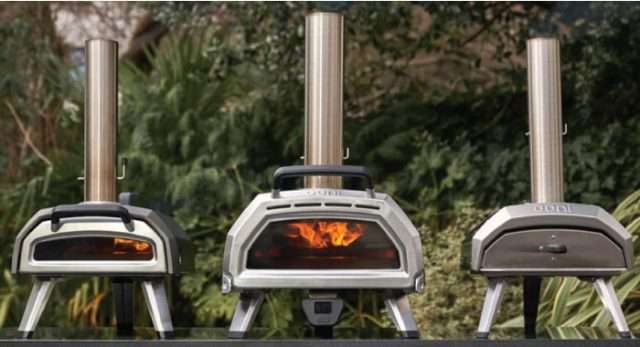
Fuel Choice: Wood, Charcoal, or Gas?
This is one of the biggest buying decisions with the Karu 16.
Choose wood if you want the best pizza experience
Wood is what I use most for pizza.
It gives you high heat, strong flame, and that proper wood-fired cooking feel. It does take more effort because you need to add pieces regularly, but pizza cooking is hands-on anyway, so I don’t find it that annoying.
Choose charcoal if you want steadier heat
Charcoal is better when you want lower, more controlled heat.
It’s not my first choice for classic 60-second pizza on its own, but it’s very useful for cooking other foods in the Karu 16.
Choose gas if you want convenience
Gas is the easiest option.
It’s faster to manage, less messy, and better when you don’t want to think about the fire. The downside is that the burner costs extra, and changing between gas and solid fuel takes a bit of setup.
If you know you’ll only use gas, the Ooni Koda 16 may be the better buy. Here’s my Ooni Koda 16 review.
What Else Can You Cook in the Ooni Karu 16?
The Karu 16 is my favorite Ooni for cooking foods other than pizza.
You can use any Ooni for more than pizza, but the Karu 16 makes it easier because of the larger size, glass door, built-in temperature gauge, and fuel flexibility.
You can cook steak, salmon, vegetables, bread, desserts, and flatter baked dishes. We’ve even done smores dip in it. Get our Ooni S’mores Dip Recipe here.
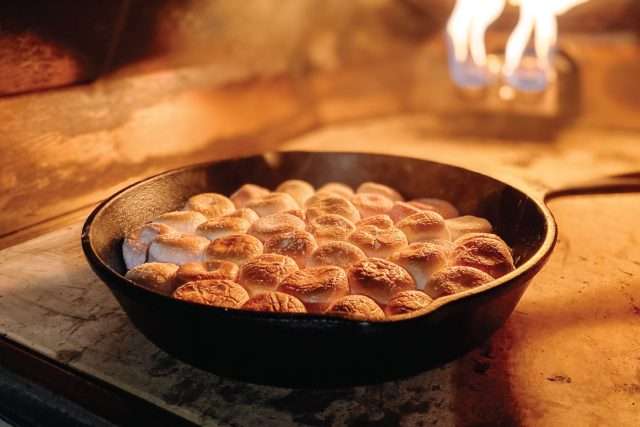
That’s where charcoal and gas are especially useful.
Not everything needs the ripping-hot wood flame you want for pizza. Some foods need a lower, steadier temperature, and the Karu 16 gives you more ways to get there.
One important thing: use cast iron for wet foods.
Don’t put raw steak, fish, or anything juicy directly on the cordierite pizza stone. The stone can absorb liquid, flavor, and odor, and you risk damaging it. Use a cast iron pan or one of Ooni’s cast iron dishes instead.
Performance Breakdown
Temperature Control
The Karu 16 can get very hot, very quickly.
Ooni says it can reach pizza temperatures in around 15 minutes, and that matches how it feels in real use. You light it, let the stone and chamber come up to heat, then start cooking once the temperature is high enough.
I usually want to see at least around 750°F before launching the first pizza.

The built-in thermometer is useful because it gives you constant feedback. You’re not just guessing whether the oven is hot enough.
The chimney damper also gives you some control over airflow and temperature. It’s a simple lever, but it does what it needs to do.
With wood, temperature control is more active. You’re managing the fire by adding fuel, watching flame size, and making sure you don’t smother the firebox.
With gas, it’s much easier. You adjust the burner and let it run.
Flame Management
For pizza, flame matters.
You don’t just want a hot stone. You want flame rolling across the top of the oven so the toppings and cheese cook while the base crisps from underneath.
That’s why wood works so well in the Karu 16.
If the flame dies down too much, the base can keep cooking while the top lags behind. If the fire is too aggressive, you can scorch the top before the pizza is evenly cooked.

You get better at reading it with practice.
The glass door helps because you can see what’s going on without opening the oven constantly. And unlike some removable-door Ooni models, the Karu 16’s door is hinged like a regular oven door, so you’re not looking for somewhere to hang or place a hot door.
Smoke Flavor
The Karu 16 can burn real hardwood, but the pizza does not come out tasting heavily smoked.
That’s because the cook is so fast.
You get a little wood-fired flavor, but the main benefit of wood is the high heat and flame pattern.
If you’re expecting heavy barbecue-style smoke, this isn’t that. And personally, I wouldn’t want that on Neapolitan-style pizza anyway.
Capacity
The 16-inch capacity is excellent for families.
Four large pizzas will feed our family of five with leftovers. If we’re entertaining, we’ll double the dough batch and cook eight.
The bigger opening and larger stone also make the oven easier to work with. You have more room for turning, and you’re not trying to squeeze everything into a tiny cooking space.
The downside is that you need somewhere sensible to prep, launch, turn, and serve bigger pizzas.
A proper table helps.
Build Quality
The Karu 16 feels like a serious oven.
The shell is powder-coated carbon steel, the silver parts are stainless steel, and the oven has ceramic fiber insulation inside the body. The pizza stone is 0.6-inch cordierite, split into two pieces so it fits the shape of the oven without being one huge awkward slab.

The handles stay cool enough to use, and after a lot of use, our firebox has not warped, twisted, or fallen apart.
The glass door is one of my favorite parts of the design. It gives you a clear view inside and helps the oven feel more complete than the smaller, simpler models.
Our glass door did get really blackened during the first burn-in, but that hasn’t happened since. It also showed why doing the first burn-in before cooking is important.
Ease of Use
The Karu 16 is easy enough for beginners, but it is not the lowest-effort Ooni.
The learning curve is mostly around dough, launching, turning, and managing the fire.
None of it is hard, but it is hands-on.
If you use gas, it becomes much easier. If you use wood, you need to keep feeding the fire. If you use charcoal, you need to let it establish properly and manage the heat differently.
I don’t find the extra work a big problem because pizza cooking already requires you to stand nearby. You’re stretching dough, topping pizzas, launching, turning, and pulling them out. Adding a small piece of wood every few minutes fits into that rhythm.
But if you want the simplest possible pizza night, gas is easier.
Portability
The Karu 16 is movable, but I would not buy it as a portable pizza oven.
The chimney can come off, the legs fold down, and there are no power cords if you’re using solid fuel. You can put it in a vehicle and take it somewhere.
But it weighs 62.6 lbs and is bulky. The built-in temperature gauge also sticks down, which makes it awkward to sit flat with the legs folded.
This oven is much better as a permanent backyard setup.
If portability is important, go smaller.
Accessories You Actually Need
You do not need to buy every Ooni accessory.
The one accessory you absolutely need is a pizza peel. Without it, you can’t properly launch and remove pizzas.
The second accessory I strongly recommend is a turning peel. You can cook without one, but it makes the process much easier.

After that, accessories become more optional.
A bigger cutting board or serving peel is useful because 16-inch pizzas are awkward on normal kitchen boards. A good table is also helpful because the Karu 16 is deep and heavy, and it’s nice to have a proper permanent spot for it.
The oven brush is useful for cleaning, and the topping station is fun if you do a lot of pizza parties.
But don’t feel like you need to buy everything at once.
Start with the oven, a launch peel, and ideally a turning peel. Add the rest later if you actually need it.
Cleaning
The Karu 16 produces surprisingly little ash.
You should still empty the fire tray after each cook to keep airflow clear and the oven in good condition. Just make sure the ash is completely cold before putting it in the bin. I usually empty it before the next cook rather than straight after the last one, just to be safe.

The pizza stone doesn’t need much regular cleaning.
If something sticks, run the oven hot to burn off residue, then scrape it with a spatula or pizza oven brush.
Do not wash or submerge the stone.
Cordierite absorbs water, and if it absorbs too much, it can crack when heated. A cracked pizza stone is not something you want to deal with.
You can also flip the stone periodically so it wears more evenly.
What to Expect
The Karu 16 is excellent, but it is not effortless.
Expect:
- A bit of practice with dough stretching and launching.
- Very fast pizza cooks once the oven is hot.
- A hands-on cooking process where you stay near the oven.
- Better family cooking speed than a 12-inch oven.
- Regular fuel top-ups if cooking with wood or charcoal.
- A more relaxed cook if using the optional gas burner.
- Less smoke flavor than you might expect from a wood-fired oven.
- A large oven that is best left set up, not moved constantly.
- Extra cost if you want the gas burner.
- A need for at least a pizza peel, and ideally a turning peel too.
- Pizza that is good enough to make takeout feel very average.

Pros and Cons
Pros
- Makes genuinely excellent pizza
- Real wood, charcoal, or gas option
- 16-inch size is great for families
- Glass door makes cooking easier to watch
- Versatile outdoor oven
Cons
- No longer the current US model
- Gas burner costs extra
- Wood/charcoal need regular tending
- One of the more expensive Ooni setups
Who This Is For — And Who Should Skip It
Who it's best for
Anyone who wants a large, multi-fuel Ooni for backyard pizza nights and want the option to cook with hardwood, charcoal, or gas.
Who should skip it
Anyone who wants the current model, needs something portable, only wants gas cooking, or doesn’t want to manage a live fire.
Also available at: Amazon
Alternatives
If you’re not fully sold on this pizza oven, these are the alternatives I’d look at next.
Multi-Fuel Cooking - Ooni Karu 2 Pro
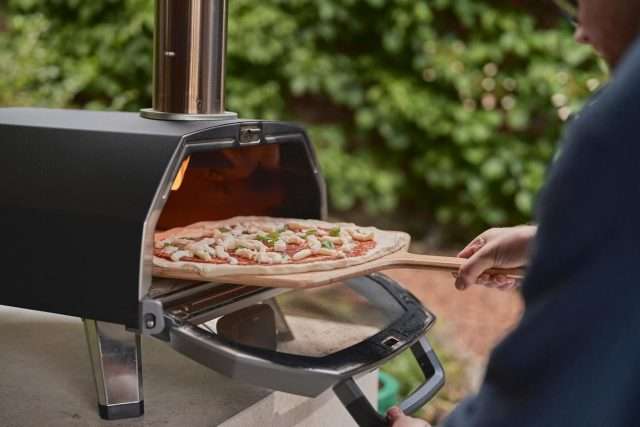
This is the closest current replacement for the Karu 16 in the US market.
It keeps the same general idea: a large multi-fuel Ooni that can cook big pizzas, run on wood or charcoal out of the box, and use gas with the separate burner.
If you like the Ooni Karu 16 and want to buy new, this is the pizza oven you should grab.
Newer Gas Model - Ooni Koda 2 Pro
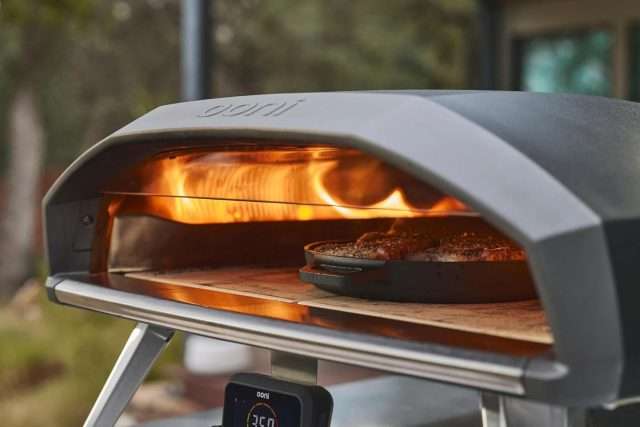
Choose the Ooni Koda 2 Pro if you like the size and premium feel of the Karu 16 but know you’ll only use gas.
You lose the wood and charcoal option, but gain a simpler gas setup, a larger cooking area, built-in digital temperature features, and a newer burner design. This is also a generation 2 model like the Karu 2 Pro.
Cheaper Gas Option - Ooni Koda 16

Choose the Ooni Koda 16 if you want a large gas Ooni but don’t need the newest model.
It’s simpler than the Karu, usually cheaper than the newer premium models, and still a great option for easy weeknight pizza if you don’t want to manage wood or charcoal.
Read my review of the Ooni Koda 16.
Smaller Multi-Fuel Option - Ooni Karu 12

Choose the Ooni Karu 12 if you like the multi-fuel idea but want something smaller, lighter, and easier to move.
You won’t get the same family-sized cooking space as the Karu 16, but you still get wood and charcoal cooking out of the box, with gas available separately.
Read my Ooni Karu 12 review.
FAQs About the Ooni Karu 16
Is the Ooni Karu 16 still worth buying?
Yes, but it depends on the price and where you are buying.
For US buyers shopping new, I’d look at the Karu 2 Pro first because it is the current large Karu model. But if you find a Karu 16 second-hand, discounted, or still available in your region, it is still a very good pizza oven.
The cooking experience is excellent, especially if you want wood, charcoal, and gas flexibility.
Is the Ooni Karu 16 better than the Karu 12?
For families and entertaining, yes.
The Karu 16 lets you cook larger pizzas and gives you more room to work inside the oven. It is also better for cooking foods other than pizza because of the larger chamber, glass door, and built-in thermometer.
But the Karu 12 is cheaper, lighter, and more portable.
So the better oven depends on how you’ll use it.
Is the Ooni Karu 16 easy for beginners?
Yes, but it is hands-on.
You’ll need to learn how to stretch dough, launch pizzas, turn them quickly, and manage the fire if you’re cooking with wood or charcoal. None of that is too hard, but it does take a few cooks to feel comfortable.
If you want the easiest setup, using the gas burner makes the Karu 16 much simpler.
Does the Ooni Karu 16 come with the gas burner?
No.
The Karu 16 comes ready to cook with hardwood and charcoal. If you want to use gas, you need to buy the gas burner separately.
That’s worth factoring into the total price, especially if you think you’ll mostly use gas.
What wood should you use in the Ooni Karu 16?
Use small, dry hardwood pieces.
Ooni recommends kiln-dried beech or oak, and pieces around 8 inches long work well in the firebox. We’ve used other locally available hardwood without problems.
Do not use treated, painted, toxic, or resin-heavy woods like pine or spruce.
Can the Ooni Karu 16 stay outside?
It can be kept outside with the right protection, but I’d use a proper cover and avoid leaving it exposed to weather unnecessarily.
It’s big and heavy, so moving it in and out of a garage all the time is annoying. The better setup is a permanent outdoor spot with a cover.
Final Verdict
The Ooni Karu 16 is still one of my favorite Ooni ovens I’ve cooked on.
The pizza is incredible, the 16-inch size is genuinely useful for families, and the ability to cook with wood, charcoal, or gas makes it more flexible than most backyard pizza ovens.
But the buying advice has changed.
If you’re in the USA and buying new, the Karu 2 Pro is now the large multi-fuel Ooni I’d look at first.
If you find a Karu 16 second-hand, discounted, or still available where you live, it is still absolutely worth considering. It’s not the easiest Ooni to move around, and it takes more fire management than a gas oven, but if you want a large backyard pizza oven that feels like a proper outdoor oven, the Karu 16 is a brilliant bit of kit.
Also available at: Amazon


Kate Brown is the founder of Burning Brisket, where she shares hands-on smoker reviews, barbecue gear guides, and practical tips for backyard BBQ. She has cooked extensively on charcoal, pellet, electric, and kamado smokers, using real-world experience to help beginners choose the right equipment and make better barbecue at home. Her focus is honest, straightforward advice that makes smoking and grilling easier without unnecessary complexity.