The Ooni Volt 12 was Ooni’s first electric pizza oven and the first Ooni you could use indoors.
I cooked on the original Volt 12 indoors and outdoors, and while it was not the cheapest or smallest Ooni, it made proper pizza oven pizza without needing gas, wood, pellets, or good weather.
But, there is one big thing to know before buying now.
The original Ooni Volt 12 has been replaced by the Ooni Volt 2. The core idea is the same — an indoor electric Ooni pizza oven — but the newer version has a smaller footprint, updated controls, preset pizza modes, a larger viewing window, and a wider temperature range.
Burning Brisket is reader-supported. When you buy through links on our site, we may earn an affiliate commission. Read our affiliate policy to learn more.
Table of Contents
Quick Verdict
The Ooni Volt 2 is the model I would look at now if you want an indoor electric pizza oven. I have cooked on the original Volt 12, not the Volt 2, but the main things I liked about the Volt 12 still apply: it is easy, clean, fast, and makes pizza that is so much better than a regular kitchen oven.
The Volt 2 also fixes some of the original Volt 12’s biggest drawbacks. The old Volt 12 technically fit on a kitchen counter, but it was bulky. The Volt 2 has a smaller footprint while keeping the same cooking space. It also adds easier preset controls and a wider temperature range, which makes it feel more like a useful indoor appliance instead of just a pizza-only machine.
It is still not the cheapest way to buy an Ooni. And if you only want to cook outside, I would still look at a gas model instead. But, if indoor pizza is the reason you are buying, the Volt 2 is the current electric Ooni to get.
Choose Ooni Volt 2 if:
- You want to make proper pizza indoors
- You want the easiest Ooni to use
- You do not want gas, wood, pellets, or fire management
- You want better pizza than a regular kitchen oven can make
- You want the newer version instead of hunting down the older Volt 12
Skip Ooni Volt 2 if:
- You only want an outdoor pizza oven
- You want the cheapest Ooni
- You want real wood-fired flavour
- You want larger pizzas
- You do not have room for a dedicated countertop appliance
Also available at: Amazon
Important Update: Volt 12 vs Volt 2
The Ooni Volt 12 is no longer the current model. Ooni now sells the Ooni Volt 2.
I have kept this review live because my hands-on cooking experience with the Volt 12 is still useful. The Volt 2 follows the same basic concept: an electric Ooni designed for indoor pizza.
But, I would not write this as if nothing has changed.
The Volt 2 is not just a different colour or a light refresh. It is a second-generation version with some real updates that matter for buyers.
| Feature | Ooni Volt 12 | Ooni Volt 2 |
|---|---|---|
| Current status | Older model, now replaced | Current electric Ooni model |
| Fuel type | Electric | Electric |
| Indoor use | Yes | Yes |
| Pizza size | 12 inch pizzas | 12 inch pizzas, with up to 13 inch cooking space |
| Maximum temperature | 850°F / 450°C | 850°F / 450°C |
| Footprint | Larger and bulkier | 30% smaller footprint |
| Viewing window | Smaller viewing window | 64% larger viewing area |
| Controls | More manual dial-based controls | Updated digital controls with presets |
| Pizza presets | No dedicated pizza style presets | Neapolitan, Thin & Crispy, and Pan Pizza presets |
| Temperature range | More limited | 70°F to 850°F / 20°C to 450°C |
| Extra modes | Mainly pizza-focused | Oven, broil, and dough-proofing modes |
| Heat management | Adjustable top and bottom elements | Pizza Intelligence adaptive heat control |
| Cleaning | No fuel mess, but standard indoor cleanup | Adds a dishwasher-safe smoke and grease filter |
| Best reason to choose it | Still useful if you already own one or find old stock cheaper | Better current buy for most people because it is smaller, newer, and easier to use |
The biggest real-world improvement is size.
One of my main complaints with the original Volt 12 was that it did fit on a standard kitchen countertop, but it was still quite large. If you had a small kitchen, it was not the easiest appliance to leave out.
The Volt 2 directly improves that. It keeps the same useful pizza size but takes up less room, which makes a lot more sense for an indoor pizza oven.
The second big improvement is usability.
The original Volt 12 was already easy compared with fire or gas ovens. But, it still had more manual control over top and bottom heat. That was useful if you liked adjusting things, but the Volt 2’s presets should make it easier for people who just want to choose a pizza style and cook.
Because I have not personally cooked on the Volt 2 yet, I am not going to pretend I can compare the pizza results directly. But, based on my experience with the Volt 12, the electric Ooni concept already worked. The Volt 2 looks like Ooni has made it smaller, more beginner-friendly, and more useful as a kitchen appliance.
At a Glance
Strengths
- Lets you make Ooni-style pizza indoors
- Much better pizza than a regular kitchen oven
- No gas, wood, pellets, soot, or ash
- Easy to use compared with flame-based ovens
- Current Volt 2 has a smaller footprint than Volt 12
- Current Volt 2 adds preset pizza modes
- Adjustable heat control makes electric pizza more flexible
- Good option for wet, cold, or apartment-style cooking
Weaknesses
- More expensive than Ooni’s outdoor 12 inch ovens
- No wood-fired flavour
- Still limited to smaller pizzas
- Not the best choice if you only cook outdoors
- The original Volt 12 was quite bulky
- Electric means you need access to power
Best use case
The Ooni Volt makes the most sense if you want proper pizza indoors. If you are only cooking outside, one of Ooni’s gas or multi-fuel ovens will usually make more sense.
Real Cooking Experience: What the Original Ooni Volt 12 Was Like to Use
Cooking on the Ooni Volt 12 felt much closer to using a regular kitchen oven than using a normal outdoor pizza oven.
You plug it in, turn it on, set the temperature, let it preheat, and cook. There is no fire to light, no gas bottle to connect, no pellets to feed, and no flame to manage.
That was the biggest thing the Volt had going for it. It removed almost all of the fiddly parts of pizza oven cooking while still giving you a much hotter cooking environment than a normal oven.
For Neapolitan-style pizza, I ran the Volt 12 at its maximum temperature of 850°F / 450°C. It took about 20 minutes to heat up, and once it was ready, the pizza cooked in about 90 seconds.
That is a little slower than Ooni’s flame-based ovens, which usually cook a pizza in around 60 seconds. But, in real life, 90 seconds is still very fast. You are not standing around waiting ages for each pizza. You can still keep them coming one after another.
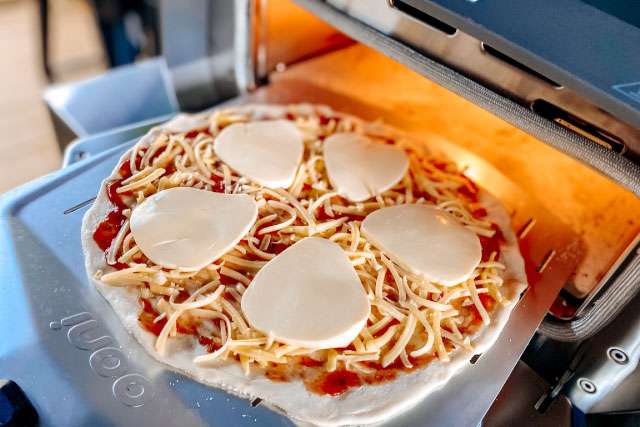
The pizza still needed turning.
I originally thought the circular top element might mean you could just launch the pizza and leave it alone. But, that was not the case. Ooni recommended turning it as needed, and they were right.
For Neapolitan-style pizzas, I usually turned the pizza every 30 seconds. So, it had about two turns during the 90 second cook. That gave more even browning across the crust and toppings.
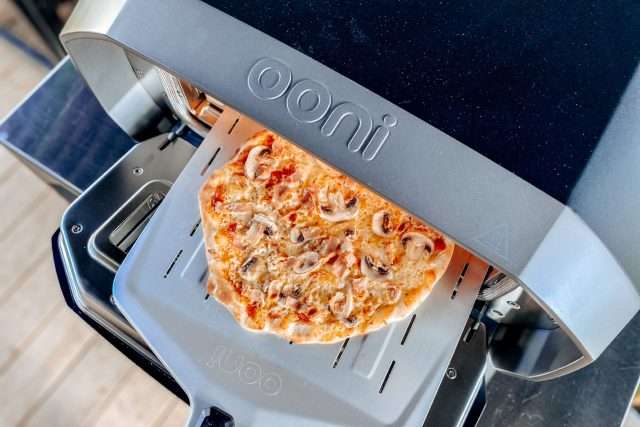
You can use a standard pizza peel to take the pizza out, turn it by hand, and slide it back in. But, I prefer using a turning peel because it keeps the pizza in the oven and makes the whole process smoother.

If you are trying to keep costs down, you can get by without one. But, a turning peel is one of the accessories I actually like using.
The heat in the original Volt was very controllable. It had separate top and bottom elements, and the balance dial let you shift more heat toward the base or the toppings.
Most of the time, the automatic setting did the job well. But, I did use the balance control when I wanted a little more top heat, or when something on top was cooking too fast and I wanted to ease off.
That flexibility was one of the things I really liked about the Volt 12.
With a flame oven, you naturally get different heat zones depending on where the fire is. With the Volt, you do not have flame, but the adjustable elements gave you some control over how the pizza cooked.
The base came out crisp and light without turning cracker-like. The toppings cooked properly, the cheese melted beautifully, and the crust got that proper hot-oven finish you just do not get from a normal kitchen oven.

Because it was electric, there was obviously no wood-fired taste. But, the pizza still tasted legit.
I would be very happy if someone served me a Volt pizza at a restaurant.
Compared with pizza from Ooni’s flame-based ovens, I would say the Volt pizza was fractionally not quite as good. But, it was close enough that I would happily keep an electric Ooni set up in the kitchen and still use a larger outdoor Ooni for summer nights and bigger pizza parties.
That is probably the best way to think about it.
The Volt is not trying to be the most traditional pizza oven. It is trying to be the easiest one you can use indoors. And, based on the Volt 12, that idea worked really well.
What Changed With the Ooni Volt 2?
The Volt 2 keeps the same basic idea as the Volt 12 but improves the parts that matter most for an indoor appliance.
It Is Smaller Than the Volt 12
This is the biggest improvement in my opinion.
The original Volt 12 did fit on a standard kitchen countertop, but it was still wide and bulky. In a larger kitchen, it could look good set up permanently. In a small kitchen, it was a lot of appliance to make room for.
The Volt 2 has a 30% smaller footprint than the Volt 12 while still keeping the same 13 inch cooking space.
That is exactly the sort of change the original needed.If an electric pizza oven is going to live inside, it cannot just cook well. It needs to make sense in a real kitchen. A smaller body makes the Volt 2 a lot easier to justify.
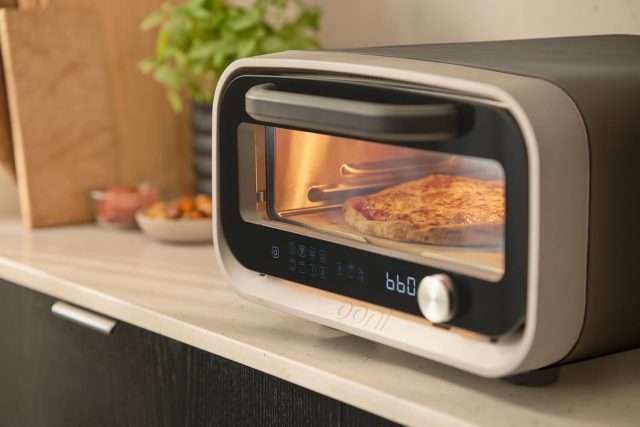
It Has Easier Preset Controls
The original Volt 12 was already easier than Ooni’s fire-based ovens. But, it still gave you more manual control with the top and bottom balance dial.
That was useful, but it also meant you needed to think about how much heat you wanted on the base versus the toppings.
The Volt 2 adds preset pizza modes for Neapolitan, Thin & Crispy, and Pan Pizza. That makes it more beginner-friendly and better suited to people who want to press a button and get close without fiddling.
For the sort of buyer who wants an indoor Ooni, I think that matters.
A lot of people looking at the Volt are not trying to become obsessive backyard pizza nerds. They just want really good pizza at home without the stress. The presets fit that buyer better.
It Has a Larger Viewing Window
The Volt 2 has a much larger viewing area than the Volt 12.
That sounds like a small thing, but with pizza, being able to see what is happening matters. You are watching the crust brown, the cheese melt, and one side cook faster than another.
On the original Volt 12, I liked having the interior light and glass door because it made the cook easier to watch than some outdoor ovens. A larger window should make that even better.
It Has a Wider Temperature Range
The original Volt 12 was mainly a pizza oven.
You could cook other things in it, but the temperature range and setup made it feel like a high-heat pizza appliance first.
The Volt 2 has a wider temperature range from 70°F to 850°F / 20°C to 450°C. That means it can proof dough at low temperatures as well as bake, broil, and cook pizza at high heat.
That makes the Volt 2 easier to justify as a kitchen appliance.
I would still buy it for pizza first. But, being able to proof dough in the same unit is genuinely useful, especially if you are making pizza at home regularly.

It Adds Pizza Intelligence
Ooni describes the Volt 2 as having Pizza Intelligence, which uses internal sensors to monitor and adjust heat distribution.
In plain English, that should mean more stable, even heat with less guesswork.
I have not personally tested this feature yet, so I am not going to say how much difference it makes in real cooking. But, based on what I liked and did not like about the Volt 12, better automatic heat control is a logical upgrade.
The original Volt 12 already made very good pizza. If the Volt 2 makes that easier and more consistent, that is a useful improvement.
It Adds a Smoke and Grease Filter
The Volt 2 also adds a dishwasher-safe smoke and grease filter.
That is useful because indoor pizza cooking is not just about how the pizza tastes. It is also about how the kitchen handles it.
With the original Volt 12, we did not have issues with the oven smoking up the kitchen during normal pizza cooking. But, I was still careful with cleaning. I preferred brushing and vacuuming the stone once it was cold rather than doing a high-heat burn-off inside and risking smoke.
A filter makes sense for an indoor oven, especially if people want to use the Volt 2 for more than just plain pizza.
Is the Pizza Still the Main Reason to Buy It?
Yes.
The whole point of the Ooni Volt is that it gives you pizza oven results inside.
A normal kitchen oven just does not get hot enough to make the same style of pizza. You can make decent homemade pizza in an oven. But, it is not the same as cooking on a hot stone at pizza oven temperatures.
On the original Volt 12, the difference was obvious.
The base crisped better. The crust puffed more. The toppings cooked quickly instead of drying out slowly. The cheese melted properly. The whole pizza tasted more like something from a real pizza oven instead of a homemade oven pizza.

It was not exactly the same as a wood or gas Ooni. I still think the flame-based ovens have a slight edge. But, the Volt 12 made pizza that was much closer to outdoor Ooni pizza than regular oven pizza.
That is why the Volt 2 still makes sense.
It is not just an expensive countertop oven. It is for people who want proper pizza but either cannot or do not want to cook outside.
Is the 12 Inch Size Big Enough?
The original Ooni Volt 12 made 12 inch pizzas. The Volt 2 keeps that same general size, with Ooni describing it as having up to 13 inch cooking space.
A 12 inch pizza is about the size of a medium pizza from most pizza places. It is not huge, but it is a practical size for home cooking.
For our family, 12 inch pizzas are big enough to share, but still small enough that people can choose their own toppings if they want to.
They also fit easily on a standard cutting board or large plate, which is honestly quite convenient.

The dough is easier to stretch than a 16 inch pizza too. If you are new to making pizza at home, that matters. A smaller base is easier to handle, easier to launch, and less stressful when you are still learning.
If I am making Ooni’s dough recipes, most of them make enough for 6 x 12 inch pizzas. For us, that can feed up to 4 adults and 3 kids who eat a lot. With 2 adults and 3 kids, we usually have enough leftovers for a light lunch the next day.
If we are having more people over, I just double or triple the dough and keep pumping pizzas out.
So, no, the size is not ideal if you want big 16 inch pizzas. But, for most indoor pizza nights, it is enough.
And for an indoor oven, I actually think the smaller pizza size makes sense.
Performance Breakdown
Ease of Use
This is where the Volt makes the most sense.
The original Volt 12 was the easiest Ooni I had used because you just plugged it in and cooked. There was no fire, no gas connection, no wind issues, no fuel storage, and no learning curve around managing a flame.

The Volt 2 should be even easier because of the newer preset controls.
That does not mean you can ignore pizza technique completely. You still need decent dough, a peel, and a bit of practice launching and turning. But, compared with learning a live fire oven, the Volt is a lot less intimidating.
Temperature Control

The Volt 2 keeps the same maximum temperature but adds a much wider lower temperature range. That makes it more useful for dough proofing and lower-temperature cooking.
For pizza buyers, the key number is still the top temperature. You want enough heat to cook the base and toppings quickly without drying everything out.
The Volt has that
Pizza Cooking Results
The pizza from the original Volt 12 was the reason I liked it.
The crust crisped properly. The base was light and cooked through. The toppings got that proper high-heat finish. And the cheese melted exactly how you wanted because you could watch the cook through the glass door and turn the pizza when needed.

It did not have a wood-fired taste, because there was no wood. But, it still tasted like proper pizza oven pizza, not regular oven pizza.
That is the key difference.
If you are comparing the Volt to your normal oven, the Volt wins easily. If you are comparing it to a flame-based Ooni, the flame ovens still have a slight edge. But, the Volt gets much closer than I expected for an indoor electric oven.
Do You Still Need to Turn the Pizza?
On the original Volt 12, yes.
Even though it had a circular top heating element, I still needed to turn the pizza for the best browning.
For Neapolitan-style pizzas, I usually turned the pizza every 30 seconds during a 90 second cook.
Because the Volt 2 has a different heating system and Pizza Intelligence, it may reduce how much fiddling is needed. But, until I have cooked on it myself, I would still tell people to watch the pizza and be ready to turn it if one side is browning faster.
That is just part of cooking pizza well.
Top and Bottom Heat Control
One of the best things about the original Volt 12 was the ability to adjust the balance between top and bottom heat.

I used this occasionally when I wanted more colour on the toppings, or when something on top was cooking too quickly and I wanted to ease off.
The Volt 2 changes the control system, but the idea is similar: better control over how heat is distributed so the base and toppings cook properly together.
This matters because electric pizza can go wrong if the balance is off. You do not want a burnt base with undercooked toppings, or nicely melted cheese on a soft base.
The Volt’s whole job is to manage that balance indoors.
Indoor Cooking
This is the main reason to buy the Volt.
The original Volt 12 was the only Ooni I could keep set up inside and use like a kitchen appliance. That made pizza nights a lot easier, especially in bad weather.
You do not have to go outside. You do not need to check the gas bottle. You do not need to light anything. You just plug it in, preheat it, and cook.

It also smells really good while it is cooking indoors.
The Volt 2 leans even further into this indoor role with its smaller footprint, larger viewing window, and smoke and grease filter.
That is the right direction. If you are buying an electric Ooni, indoor convenience is probably the whole point.
Outdoor Cooking
The original Volt 12 could be used indoors or outdoors, as long as you had power.

The Volt 2 is now positioned much more clearly as an indoor electric pizza oven. So, I would not buy it as an outdoor-first oven.
If your plan is mainly outdoor pizza, buy an outdoor Ooni instead. You will usually get a hotter, faster, more traditional pizza oven experience for less money.
The Volt makes sense when indoor use is the reason you are buying.
Build Quality
The original Volt 12 felt like a proper Ooni product. It was solid, well finished, and nothing about it felt cheap.
The outside shell was powder-coated carbon steel, and the inside was stainless steel. The door had triple-glazed glass, and the oven was insulated to hold heat where it needed to be.
One thing I noticed on my Volt 12 was a little condensation forming around the bottom right corner of the door. I did not think it was a bad seal, but I did need to wipe a little liquid from that area after cooking.

That was not a deal-breaker, but it was a real thing I noticed.
I have not tested the Volt 2 build quality personally yet, so I would not claim long-term ownership experience with the new version. But, the original Volt 12 was very well put together.
Cleaning
The original Volt 12 was the easiest Ooni to clean because there was no ash, soot, or fuel mess.
You could run the oven hot to burn off stuck food. But, because I used the Volt indoors, I usually preferred to brush the stone with Ooni’s cleaning brush and then vacuum up the loose bits once the stone was completely cold.

That worked well for us. It was fast, simple, and we did not have smoking issues using the Volt inside.
The outside could be wiped down with a damp or dry cloth, and the glass door could be cleaned like a regular oven door.
The Volt 2 adds a smoke and grease filter, which is a useful improvement for indoor cooking.
What Else Can You Cook?
The original Volt 12 was mainly a pizza oven. That is what I would buy it for.
Unlike Ooni’s outdoor ovens, it was not recommended for fatty meats or oil-heavy foods. So, I would not treat it like a steak-searing oven in the same way I would use a cast iron pan in a flame-based Ooni.
But, you could cook other things in it.
Flatbreads, focaccia, and croissants worked well. We also made a brisket burger calzone in the Volt and it tasted incredible. I would definitely do that again.

You could grill vegetables in a cast iron pan, but you needed the pan because you do not want excess moisture going into the pizza stone. Some desserts after pizza would also be easy enough.
The Volt 2 looks more useful here because of the wider temperature range and extra modes. I would still buy it for pizza first, but the dough proofing, oven, and broil modes make it a more useful indoor appliance than the original Volt 12.
Accessories You Actually Need
The only accessory you absolutely need for the Ooni Volt is a pizza peel.
You cannot launch and remove pizzas properly without one.
For the original Volt 12, I preferred the 12 inch perforated peel. It cost more than the standard peel, but the pizza slid off more easily and was less likely to stick.

A turning peel was not essential, but I used one and thought it made cooking easier. You could turn the pizza without pulling it all the way out of the oven, which was especially useful because the Volt 12 still needed turning for even browning.
An infrared thermometer was useful for checking the stone temperature. But, as long as you preheated the Volt properly, I would not say it was as essential here as it can be on some outdoor ovens.
The cleaning brush was worth having. A pizza cutter or rocker was also useful because it was much faster than a knife.
| Accessory | Do You Need It? | My Take |
|---|---|---|
| Pizza peel | Yes | Essential for launching and removing pizzas. You cannot really use the Volt properly without one. |
| Perforated pizza peel | Best choice | More expensive than the standard peel, but the pizza slides off more easily and is less likely to stick. |
| Turning peel | Helpful | Not essential, but it makes turning easier because you can rotate the pizza without pulling it all the way out. |
| Infrared thermometer | Optional | Useful for checking the stone temperature, but not critical if you preheat the Volt properly. |
| Cleaning brush | Worth it | Makes it easy to brush loose flour and burnt bits off the stone once the oven is cold. |
| Pizza cutter or rocker | Worth it | Much faster and easier than using a knife, especially if you are making a few pizzas in a row. |
| Volt cover | Optional | Useful if the oven will be stored somewhere dusty or outside, but not essential for indoor kitchen use. |
What to Expect From the Ooni Volt
The Ooni Volt is easy to use, but it is still a proper high-heat pizza oven. Here is what to expect in real life.
- It makes pizza that is much better than regular oven pizza.
- It does not taste exactly like wood-fired pizza.
- The original Volt 12 took about 20 minutes to preheat.
- A Neapolitan-style pizza cooked in about 90 seconds.
- The original Volt 12 still needed the pizza turned during cooking.
- The Volt 2 is smaller and more kitchen-friendly than the original.
- The Volt 2 adds presets, which should make it easier for beginners.
- The pizza size is practical, but not huge.
- It is cleaner than gas, wood, charcoal, or pellet ovens.
- It is not the cheapest way to buy an Ooni.
- It makes the most sense if indoor pizza is the main reason you are buying.
Pros and Cons
Pros
- Makes proper pizza indoors
- Much better than regular oven pizza
- Very easy to use
- No gas, wood, pellets, soot, or ash
- Volt 2 is smaller than the original Volt 12
Cons
- More expensive than outdoor Ooni models
- No wood-fired flavour
- Limited to smaller pizzas
- Needs access to power
Who This Is For — And Who Should Skip It
Who it's best for
Anyone who wants proper Ooni-style pizza indoors, without gas, wood, or having to cook outside in bad weather.
Who should skip it
Anyone who only wants an outdoor pizza oven, wants 16-inch pizzas, or prefers the flavour and feel of cooking with a real flame.
Also available at: Amazon
Ooni Volt 2 Alternatives
The Volt 2 is the model I would look at if indoor pizza is the priority. But, it is not the best Ooni for everyone.
If you are mainly cooking outside, one of Ooni’s gas or multi-fuel ovens will usually make more sense.
Gas Alternative - Ooni Koda 12

The Ooni Koda 12 is the better alternative if you want a cheaper, simple gas pizza oven for outdoor use.
It is faster than the Volt, easier to move around, and costs less. But, you can only use it outside, and you need propane gas to run it.
Read my Ooni Koda 12 review.
Larger Gas Option - Ooni Koda 16

The Ooni Koda 16 is the better choice if you want larger pizzas and a roomier outdoor gas oven.
The 16-inch size gives you more space to launch, turn, and cook bigger pizzas. It is a better fit for outdoor entertaining, especially if you are feeding a family or a group. But, it is not an indoor oven.
Read my Ooni Koda 16 review.
Traditional Pizza Experience - Ooni Karu 2
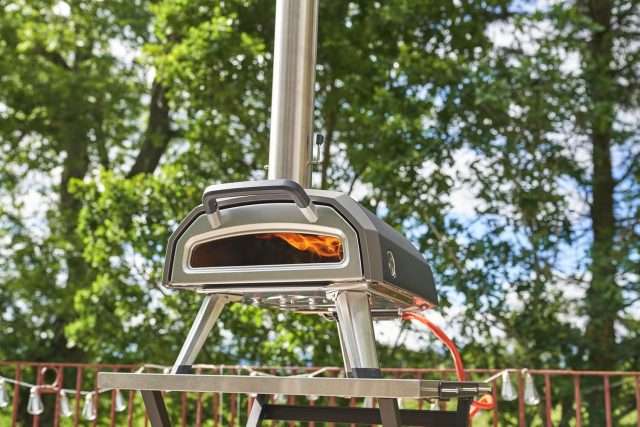
The Ooni Karu 2 is the better option if you want an outdoor oven with the option to cook using wood, charcoal, or gas.
It gives you a more traditional pizza oven experience than the Volt, but it also asks more from you. You need to manage fuel, heat, and airflow if you are cooking with wood or charcoal.
FAQ About the Ooni Volt 12 and Volt 2
Is the Ooni Volt 12 still sold?
The original Ooni Volt 12 has been replaced by the Ooni Volt 2.
You might still see the Volt 12 mentioned in older reviews or available through some retailers, but the Volt 2 is the current electric Ooni to look at now.
Is the Ooni Volt 2 better than the Volt 12?
On paper, yes.
The Volt 2 keeps the same basic indoor electric pizza oven idea, but improves the footprint, controls, viewing window, temperature range, and heat management.
I have cooked on the original Volt 12, not the Volt 2, so I am not going to pretend I can compare the pizza results directly. But, the changes Ooni made are exactly the sort of improvements I would want in a second-generation indoor pizza oven.
Is the Ooni Volt worth it?
The Ooni Volt is worth it if you want to make proper pizza indoors.
It is not the best-value Ooni if you only plan to cook outside. In that case, a gas oven like the Koda 12 or Koda 16 makes more sense.
But, for indoor pizza, the Volt is the Ooni I would look at.
Can you use the Ooni Volt inside?
Yes. Indoor use is the main reason to buy the Volt.
The original Volt 12 was designed for indoor and outdoor use, while the newer Volt 2 is now the current indoor electric model.
Either way, the big appeal is being able to plug it in and make proper high-heat pizza in your kitchen.
Does the Ooni Volt make pizza as good as a wood-fired oven?
Not exactly.
There is no wood-fired flavour because the Volt is fully electric. But, the actual pizza result from the original Volt 12 was still very good. The base crisped properly, the toppings cooked fast, and the pizza was far better than what I can make in a regular kitchen oven.
Compared with Ooni’s flame-based ovens, I would say the original Volt was fractionally not quite as good. But, it was close enough that I would happily use one indoors all year.
Do you need to turn pizza in the Ooni Volt?
On the original Volt 12, yes.
Even though it had a circular top heating element, I still got better results by turning the pizza during the cook. I usually turned Neapolitan-style pizzas every 30 seconds during a 90 second cook.
The Volt 2 has updated heat management, but I would still watch the pizza and turn it if one side is browning faster.
What else can you cook in the Ooni Volt?
The Volt is mainly for pizza, but you can cook flatbreads, focaccia, croissants, calzones, some desserts, and vegetables in a cast iron pan.
The Volt 2 should be more useful for non-pizza cooking than the original because of its wider temperature range, dough-proofing mode, oven mode, and broil mode.
Is the Ooni Volt easy to clean?
Yes. The original Volt 12 was the easiest Ooni I had cleaned because there was no soot, ash, or fuel mess.
I usually brushed the stone once the oven was cold and vacuumed up any loose bits. The outside could be wiped down, and the glass door cleaned like a regular oven door.
Do not use water on the pizza stone.
Final Verdict: Should You Buy the Ooni Volt 2?
The Ooni Volt 12 proved to me that electric Ooni pizza actually works.
It was easy, clean, fast, and made pizza that was much better than a regular kitchen oven. It was not quite the same as cooking in a flame-based Ooni, but it was close enough that I would happily keep one set up inside for year-round pizza.
Now that the Volt 12 has been replaced, I would look at the Ooni Volt 2 instead.
The newer model keeps the same indoor electric idea but improves the kitchen footprint, controls, viewing window, and temperature range. Those are useful upgrades, especially because the original Volt 12’s size was one of its main drawbacks.
If you only want to cook outside, I would save the money and buy a gas or multi-fuel Ooni instead.
But, if you want proper pizza indoors without gas, wood, pellets, or weather getting in the way, the Ooni Volt 2 is the current electric Ooni I would consider.
Also available at: Amazon

Kate Brown is the founder of Burning Brisket, where she shares hands-on smoker reviews, barbecue gear guides, and practical tips for backyard BBQ. She has cooked extensively on charcoal, pellet, electric, and kamado smokers, using real-world experience to help beginners choose the right equipment and make better barbecue at home. Her focus is honest, straightforward advice that makes smoking and grilling easier without unnecessary complexity.