You’re already set on a Kamado Joe, but now you’re stuck between the Series II and Series III.
That’s where the decision gets tricky.
On paper, the Kamado Joe Classic III and Big Joe III look like the obvious better choice. They’re newer, more expensive, and come with more features. But that doesn’t automatically mean they’re the better buy for everyone.
The key thing to understand upfront is this: both the Series II and Series III cook excellent BBQ. This isn’t really about whether the Series III makes better food. It’s about whether the extra space, cart, charcoal basket, and SlōRoller are worth paying more for.
Everything in this comparison applies to both the Kamado Joe Classic and Big Joe models. The Classic has an 18-inch grate, while the Big Joe has a 24-inch grate. The feature differences between Series II and Series III are the same across both sizes.
Burning Brisket is reader-supported. When you buy through links on our site, we may earn an affiliate commission. Read our affiliate policy to learn more.
Quick Verdict
Both are excellent kamados. The Series III is more flexible and nicer to set up, but the Series II is the smarter buy for most people.
Choose Kamado Joe Ii if:
- You want the better value Kamado Joe
- You care about cooking results more than extra accessories
- You’re happy with the 2-tier Divide & Conquer system
- You’d rather save money or add accessories separately
- You don’t think the SlōRoller is worth paying extra for
Also available at: Walmart
Choose Kamado Joe III if:
- You want the most flexible setup
- You regularly cook larger meals or mixed foods
- You like the idea of the 3-tier Divide & Conquer system
- You want the charcoal basket included from the start
- You prefer the heavier-duty cart and aluminum side shelves
Also available at: Walmart
Table of Contents
Key Differences at a Glance
| Feature | Kamado Joe II | Kamado Joe III | Does It Matter? |
|---|---|---|---|
| Cooking performance | Excellent | Excellent | No real difference in food quality |
| Main grate size | 18″ Classic / 24″ Big Joe | 18″ Classic / 24″ Big Joe | Same base size |
| Divide & Conquer system | 2-tier | 3-tier | Useful if you cook larger or mixed meals |
| SlōRoller | Not included | Included | Interesting, but not essential |
| Charcoal basket | Not included | Included | One of the better practical upgrades |
| Cart | Standard steel cart | Premium powder-coated steel cart | Nicer and sturdier on the III |
| Side shelves | HDPE | Powder-coated aluminum | Nice upgrade, but not a cooking difference |
| Price | Lower | Higher | Main deciding factor |
What’s the Same (And Why That Matters)
This is where people often overthink the decision.
The Kamado Joe II and III share the most important parts of the cooker. They both have the thick ceramic body, the same basic kamado cooking style, the Air Lift Hinge, the Kontrol Tower top vent, the AMP firebox, the fiberglass mesh gasket, and the slide-out ash drawer.
That means both models are capable of:
- Smoking brisket, pork shoulder, ribs, and chicken
- Grilling steaks and burgers over high heat
- Baking pizzas or bread
- Roasting larger cuts
- Holding steady low-and-slow temperatures
- Using lump charcoal efficiently
That ceramic body is what drives how these cook. It holds heat, keeps moisture in, and gives you that steady charcoal-fired kamado experience.
There is no meaningful cooking performance difference between the Kamado Joe II and III.
The Series III gives you more setup options. It does not magically make your brisket juicier or your steaks better.
What You Get on Both Models
Kontrol Tower Top Vent
Both the Series II and Series III come with Kamado Joe’s Kontrol Tower top vent.
This is one of my favourite Kamado Joe features because it solves a real annoyance you get with more basic kamado vents. The top vent controls airflow, which controls temperature, so it matters more than it looks like it should.
The Kontrol Tower stays where you set it when you open and close the lid. That sounds small, but if you’ve used a standard kamado cap that shifts every time you lift the dome, you know how annoying it is to reset the vent mid-cook.
It also does a better job of keeping rain and wind out compared with a more basic cast iron cap. In calm weather, this probably won’t matter much. But in less perfect backyard conditions, it makes the cook feel less fussy.

Air Lift Hinge
Ceramic kamado lids are heavy. That’s just part of owning one.
The Air Lift Hinge makes the lid much easier to open and close. You’re not fighting the full weight of the ceramic dome every time you check your food, adjust grates, or move things around.
It doesn’t change the food.
But it does make the grill nicer to live with, especially if you cook often or have other people in the house using it.
It also reduces the risk of dropping the lid too hard. With a heavy ceramic cooker, that’s not just about convenience — it helps protect the grill too.

AMP Firebox
Both models use Kamado Joe’s AMP firebox.
This is the multi-piece ceramic firebox that helps deal with expansion and contraction from heat. Instead of one solid firebox having nowhere to move, the panels can shift slightly as the temperature changes.
That matters because cracked fireboxes are one of the common long-term issues with kamado grills.
It’s not a flashy feature, but it’s one of the reasons Kamado Joe feels well thought out as a system.

Fiberglass Mesh Gasket and Lid Latch
Both the Series II and Series III also have the fiberglass mesh gasket and stainless steel latch.
The gasket helps create a tight seal around the lid, which is important for holding steady temperatures and controlling airflow.
Compared with a standard felt gasket, the fiberglass mesh gasket is a much nicer long-term setup. You’re not thinking about replacing it every time it gets worn, greasy, or compressed.
Again, this is not something that changes the flavour of your food. It just makes ownership easier.

What’s Actually Different
This is what you’re paying extra for with the Series III.
3-Tier Divide & Conquer System
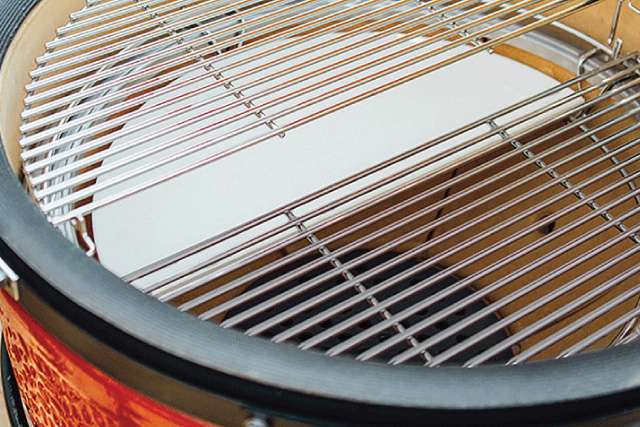
The biggest practical upgrade on the Kamado Joe III is the 3-tier Divide & Conquer system.
The Series II has a 2-tier Divide & Conquer setup. That already gives you a lot of flexibility. You can run half direct and half indirect, raise one grate higher than the other, or cook different foods at slightly different heat levels.
The Series III adds a third tier because the body is slightly taller.
That extra height gives you more room to work with, especially when you’re doing mixed cooks. Think ribs on one level, vegetables on another, or a roast sitting above a heat deflector while something else cooks closer to the fire.
This is probably my favourite upgrade on the Series III.
Space is always one of the limits with kamado cooking. The Classic size is very capable, but it’s still an 18-inch round grate. Any extra flexibility inside that same footprint is useful.
That said, you won’t use all three tiers every time you cook.
For a simple pork shoulder, chicken, steaks, burgers, or a small family dinner, the 2-tier system on the Series II is already enough. The Series III starts to make more sense if you often cook larger meals, different foods at once, or want more freedom to build your setup exactly how you like it.
SlōRoller Hyperbolic Insert
The SlōRoller is the flashiest Series III upgrade.
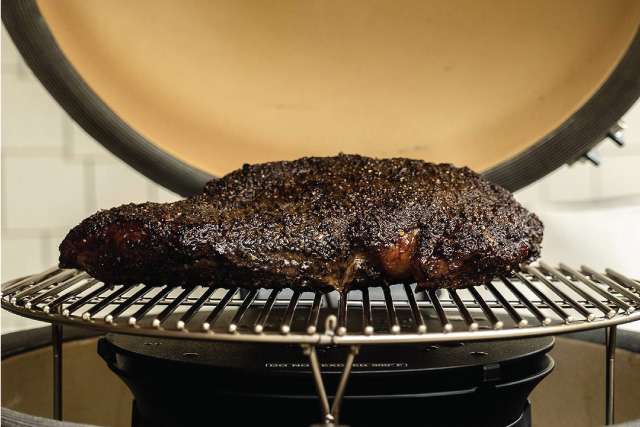
It’s designed to turn the Kamado Joe into more of a dedicated smoker by changing how heat and smoke move through the cooker. Instead of smoke rising directly around the food, the insert helps circulate heat and smoke more evenly through the dome.
That sounds impressive, and some people really like it.
But after using the SlōRoller, I wouldn’t buy the Series III for this feature alone.
Kamado Joe already smokes really well using the normal heat deflectors. I was happy with the way these cookers performed before the SlōRoller existed.
When we used the SlōRoller, we did notice a bit of a stronger smoke ring. But the flavour, tenderness, and moisture weren’t noticeably better than smoking without it.
That’s the important part for me.
It’s not that the SlōRoller is useless. It’s just not the magic upgrade it can sound like on paper. If you’re buying the Series III mostly because of the SlōRoller, I’d stop and think twice.
You can also buy the SlōRoller separately for some Series I and II models. So if that’s the only upgrade you care about, it may be cheaper to get the Series II and add the SlōRoller later.
One thing to keep in mind: you need to keep the SlōRoller under 500°F. That’s not a problem for smoking because you shouldn’t be running that hot anyway. But you do need to remember to remove it before high-heat grilling or searing.
For actual smoking technique, see how to smoke brisket.
Stainless Steel Charcoal Basket
The stainless steel charcoal basket is one of the Series III upgrades I do rate.
The Series II uses the standard fire grate setup. It works fine. There’s nothing wrong with it.
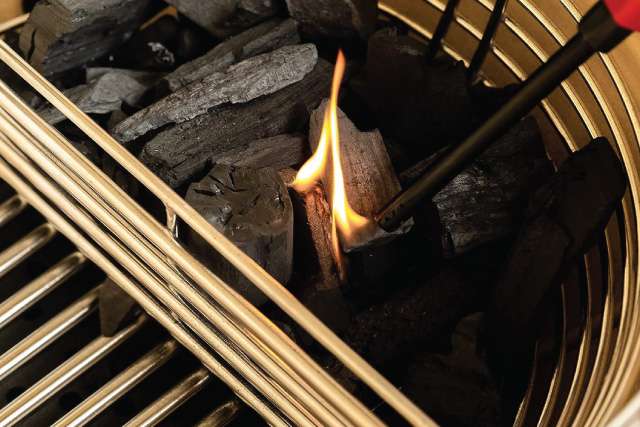
But the charcoal basket makes lighting, cleaning, and setting up the grill easier.
It holds the charcoal together, lets ash fall through more cleanly, and makes it easier to shake out leftover ash before your next cook. It also makes dual-zone setups easier because you can divide the charcoal and light one side more heavily than the other.
This is the sort of upgrade you actually notice in normal use.
Not because it changes the food, but because it makes the grill easier to set up and clean out.
The important thing is that you can buy a Kamado Joe charcoal basket separately and add it to the Series II. So, while I like this feature, it’s not enough on its own to justify buying the Series III.
If you want the Series II but like the idea of the basket, I’d just add one later.
Premium Cart
The Series III also gets a nicer cart.
The Series II cart is simple, sturdy enough, and has locking wheels. It does the job. But it does look and feel more basic.
The Series III cart is heavier-duty, with thicker legs, a storage shelf, and a more premium look. It feels more stable and better matched to the price of the cooker.

This is a real upgrade, especially if your grill is going to be sitting out as part of a nice outdoor kitchen or patio setup.
It’s not something that affects the cook.
But a Kamado Joe is heavy, and the cart is part of what you interact with every time you move it, clean around it, or store accessories underneath it.
If you care about the overall setup looking and feeling better, the Series III cart is a genuine plus.
Aluminum Side Shelves
The Series III also has powder-coated aluminum side shelves instead of the HDPE shelves on the Series II.
This is another nice-to-have upgrade.
The aluminum shelves feel more premium and are more heat-tolerant. They also match the heavier-duty feel of the Series III better than the plastic-style shelves on the Series II.
But again, this is not a cooking performance upgrade.
If the Series III price jump is already making you hesitate, I wouldn’t let the side shelves be the deciding factor.
Real Cooking Experience
From a cooking results perspective, the Kamado Joe II and III are much closer than the price difference suggests.
Both hold steady temperatures well. Both give you that charcoal-fired flavour. Both can smoke low and slow or run hot enough for grilling and searing. Both feel like proper ceramic kamados, not lightweight charcoal grills dressed up to look more serious than they are.
The difference shows up in setup and space.
On the Series II, the 2-tier Divide & Conquer system already gives you enough flexibility for most cooks. You can run direct and indirect zones, use the heat deflectors, and set up a normal smoking session without needing anything else.

On the Series III, you get more room to play with. The 3-tier rack gives you more options, the charcoal basket makes the firebox easier to manage, and the cart feels sturdier. If you like building more involved setups, cooking multiple foods at once, or squeezing more from the same grill size, the Series III feels more complete.
But the SlōRoller is where I’d be careful.
I know it’s one of the headline Series III features, but it wasn’t the upgrade that impressed me most. Kamado Joes already smoke well with the standard heat deflectors. When we used the SlōRoller, the food wasn’t noticeably more tender or moist, and the flavour wasn’t dramatically better.
For me, the Series III is worth considering because of the space, basket, cart, and overall setup — not because of the SlōRoller alone.

Price vs Value: Is the Series III Worth Paying More For?
This is the real decision.
You’re paying more for:
- More flexible 3-tier cooking setup
- Stainless steel charcoal basket
- Premium cart
- Aluminum side shelves
- SlōRoller insert
- A more complete out-of-the-box package
You’re not paying for:
- Better basic cooking performance
- Better smoke flavour by default
- A bigger main grate
- A totally different cooker
- A must-have upgrade for every backyard cook
So, is it worth it?
👉 Yes — if you cook often, want the most flexible setup, and will actually use the extra rack positions.
👉 No — if you mostly want great kamado cooking and would rather keep the price lower.
The Kamado Joe III is the nicer package.
The Kamado Joe II is the better value for most people.
Kamado Joe II vs III: Which Should You Choose?
Choose Kamado Joe II if:
- You want the better-value Kamado Joe
- You care about cooking results more than extras
- You’re happy with the 2-tier setup
- You don’t need the 3-tier rack system
- You’d rather save money
Skip Kamado Joe II if:
- You regularly run out of space inside a kamado
- You want the most flexible setup
- You prefer the heavier-duty cart and aluminum side shelves
- You know you’ll use the 3-tier Divide & Conquer
Also available at: Walmart
Choose Kamado Joe iII if:
- You want the most flexible Kamado Joe
- You regularly cook larger or mixed meals
- You like having more grate-height options
- You want the charcoal basket included
- You want the premium cart and shelves
Skip Kamado Joe IiI if:
- Budget is your main concern
- You mostly cook simple meals
- You won’t use the 3-tier rack system often
- You’re only upgrading because of the SlōRoller
- You’d rather buy the Series II and add accessories separately
Also available at: Walmart
What About the Konnected Joe?
Kamado Joe now also sells the Konnected Joe, which adds digital temperature control, app control, automatic ignition, and a built-in fan.
That’s a different style of cooker.
This comparison is focused on the traditional Kamado Joe Series II and Series III models. If you want a classic charcoal kamado experience, the II vs III decision is still the more relevant comparison.
But, if you like the idea of automatic fire starting and digital temperature control, the Konnected Joe is worth looking at separately.
For me, the Classic II and Classic III still make more sense if you want the normal Kamado Joe experience: lump charcoal, manual vents, and full control over the fire.
Final Thoughts
Both the Kamado Joe II and Kamado Joe III are excellent kamados.
The Series II is the one I’d recommend to most people. It already has the main features that make Kamado Joe nicer to use than a basic ceramic kamado, and it cooks the same food just as well as the Series III.
The Series III is the better package if you want maximum flexibility. The 3-tier Divide & Conquer system is genuinely useful, the charcoal basket is a practical upgrade, and the cart feels like a proper step up.
But, I wouldn’t buy the Series III just for the SlōRoller.
After using it, I don’t think it transforms the food enough to be the reason to spend more. Kamado Joes already smoke well with the standard heat deflectors.
So, my honest pick?
Choose the Kamado Joe II if you want the better buy.
Choose the Kamado Joe III if you want the nicest setup and know you’ll use the extra flexibility.
FAQs About the Kamado Joe II vs III
What is the main difference between Kamado Joe II and III?
The main difference is that the Kamado Joe III gives you a 3-tier Divide & Conquer cooking system, SlōRoller insert, stainless steel charcoal basket, premium cart, and aluminum side shelves.
The Kamado Joe II has the same core ceramic body, Air Lift Hinge, Kontrol Tower top vent, AMP firebox, fiberglass gasket, and 2-tier Divide & Conquer system.
Does the Kamado Joe III cook better than the II?
Not really.
Both use the same basic ceramic kamado cooking style, and both can smoke, grill, bake, roast, and sear really well.
The Series III gives you more setup options, but it doesn’t automatically make better food.
Is the Kamado Joe III worth the extra money?
It can be worth it if you’ll actually use the extra flexibility.
The 3-tier Divide & Conquer system is useful if you cook larger meals, mixed foods, or want more control over grate height. The charcoal basket and cart are nice upgrades too.
But, if you mostly cook simple family meals or one main cut at a time, the Series II is probably the better buy.
Is the SlōRoller worth it?
I wouldn’t buy the Series III just for the SlōRoller.
When we used it, we noticed a bit of a stronger smoke ring, but the flavour, tenderness, and moisture weren’t dramatically better than smoking with the normal heat deflectors.
Some people love it, but for me, it’s not the main reason to upgrade.
Can you add a charcoal basket to the Kamado Joe II?
Yes. You can buy the Kamado Joe charcoal basket separately and add it to the Series II.
That’s one reason the Series II still makes a lot of sense. If the charcoal basket is the main upgrade you want, you don’t necessarily need to buy the Series III.
Can you add the SlōRoller to the Kamado Joe II?
Yes, the SlōRoller can be bought separately for compatible Kamado Joe models.
But I’d only do that if you really want to try it. The standard heat deflector setup already works very well for smoking.
Which is better for smoking, Kamado Joe II or III?
Both are very good for smoking.
The Series III gives you the SlōRoller and more rack flexibility, but the Series II still smokes extremely well with the standard heat deflectors.
For most backyard cooks, the difference is more about setup than final food quality.
Which Kamado Joe should most people buy?
Most people should buy the Kamado Joe II.
It gives you the main Kamado Joe features, cooks beautifully, and costs less than the Series III.
The Series III is worth it if you want the most flexible setup and don’t mind paying more for it.

Kate Brown is the founder of Burning Brisket, where she shares hands-on smoker reviews, barbecue gear guides, and practical tips for backyard BBQ. She has cooked extensively on charcoal, pellet, electric, and kamado smokers, using real-world experience to help beginners choose the right equipment and make better barbecue at home. Her focus is honest, straightforward advice that makes smoking and grilling easier without unnecessary complexity.