If you’ve been looking for an offset smoker and been shocked by the price, you’re not alone. For what looks like a pretty basic barbecue with no electronics, good offsets get expensive fast.
That’s mostly because thick steel, good airflow, and solid construction cost money. Once you start looking at proper backyard stick burners from brands like Lang, Yoder, Workhorse, or Meadow Creek, you’re often well above the $1000 mark.
So, this is not a list of dream offsets. It’s a shortlist of offset smokers under $1000 that are actually worth considering if you want real wood-fired BBQ without spending premium pit money.
The steel is thinner than you’ll get on a serious offset. They can leak smoke. They need more fire management, especially in cold or windy weather. But, choose carefully and you can still turn out very good ribs, pork, brisket, chicken, and sausages while learning how to run a real fire.
Burning Brisket is reader-supported. When you buy through links on our site, we may earn an affiliate commission. Read our affiliate policy to learn more.
Table of Contents
Quick Picks: The Best Offset Smokers Under $1000
These are the offset smokers I’d look at first if you want something that’s under $1000.
🥇 Best Overall
IF YOU WANT: The easiest affordable offset for regular backyard BBQ.
🏷️ Best VAlue
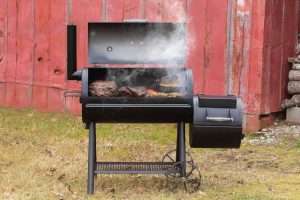
IF YOU WANT: A cheaper classic offset that can still cook great food.
↔️ BEST Large
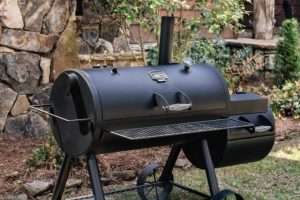
IF YOU WANT: More cooking space for bigger briskets, ribs, and group cooks.
▤ Best Vertical
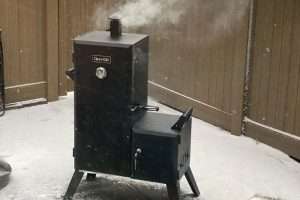
IF YOU WANT: More rack space in a smaller backyard footprint.
Best Offset Smokers Under $1000: Comparison Table
Here’s a quick side-by-side comparison of our top picks for an offset smoker under $1000 before diving into the full reviews.
| Smoker | Type | Cooking Area / Size | Best For | Main Reason to Buy |
|---|---|---|---|---|
| Oklahoma Joe’s Highland Reverse Flow | Horizontal reverse-flow offset | 619 sq in main chamber | Most backyard cooks | Reverse-flow setup in a practical, manageable size |
| Oklahoma Joe’s Highland | Traditional horizontal offset | 619 sq in main chamber | Best value | Same basic OKJ build for less money |
| Oklahoma Joe’s Longhorn Reverse Flow | Large horizontal reverse-flow offset | 751 sq in main chamber | Bigger cooks | More grate space with the same reverse-flow style |
| Dyna-Glo Signature Series Vertical Offset | Vertical offset | 1,382 sq in total rack space | Vertical capacity | Lots of rack space in a smaller footprint |
What to Expect From an Offset Smoker Under $1000
Offset smokers under $1000 can cook very good food, but they are still budget stick burners compared to heavier, premium quality backyard pits.
Expect:
- Thinner steel than premium offset smokers
- More smoke leakage around doors and joins
- More fuel use in cold, wet, or windy weather
- Built-in temperature gauges that are not very accurate
- Firebox paint that may flake or burn off
- Some basic sealing or gasket work if you want better performance
- More hands-on cooking than pellet, electric, or gas smokers
- Stronger wood-smoked flavor than most pellet smokers
- A learning curve if you have never managed a live fire before
If you want something more affordable again, check out our guide to the best offset smokers under $500. Just know that once you drop below this price point, the compromises usually get bigger.
Also check out our best offset smokers round-up to see what wins without budget constraints.
How I Chose These Smokers
I’ve cooked on a lot of smokers over the years, including offset smokers, pellet smokers, charcoal smokers, and electric smokers. That experience shapes what I look for most: steady heat, usable airflow, practical cooking space, decent fire management, and whether the smoker actually makes BBQ enjoyable instead of frustrating.
This guide is deliberately tight. Under $1000, there are not dozens of offsets I’d happily recommend. A lot of them are too thin, too leaky, too awkward to run, or better treated as charcoal grills with a side firebox than proper stick burners.
The Oklahoma Joe’s Highland and Longhorn models are similar in a lot of ways, so I’ve treated the decision mostly as a size and airflow question. If you want the most manageable reverse-flow setup, start with the Highland Reverse Flow. If you want the same idea with more cooking space, look at the Longhorn Reverse Flow. If you want the cheapest sensible horizontal offset, the regular Highland is the value pick.
I’ve also included one vertical offset because not everyone wants a long horizontal smoker. The Dyna-Glo Signature Series Vertical still gives you side-firebox cooking, but it suits a different type of buyer.
The Best Offset Smokers Under $1000 Reviewed
Here are the budget-friendly offset smokers I’d look at first, based on cooking space, fire control, build quality, and who they actually suit.

Best Overall
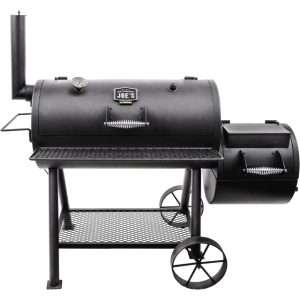
Oklahoma Joe’s Highland Reverse Flow
The Oklahoma Joe’s Highland Reverse Flow is my best overall pick for most backyard cooks.
It gives you a manageable offset smoker with enough space for regular BBQ, plus the easier heat control of a reverse-flow setup.
Why this works
- The reverse-flow setup helps even out the heat across the cooking chamber.
- The 619 square inches of main cooking space is enough for normal family BBQ and small gatherings.
- It gives you the real offset experience without the size and price of a premium backyard pit.
- The single-level cooking grate makes it easier to fit brisket, pork butts, ribs, and whole chickens.
- You can use the firebox grate for small grilling or reverse searing.
- It is easier to live with than a larger offset if you do not regularly cook big batches.
Cooking experience
The Highland Reverse Flow is a good fit if you want the classic offset experience but do not need a huge smoker. You still have to build and manage a fire, watch the temperature, adjust the dampers, and feed it fuel throughout the cook. It is not set and forget. But, once you understand how it likes to run, it is very workable.
The reverse-flow setup is the main reason I’d make this the best overall choice instead of the standard Highland. On a normal offset, the firebox side usually runs hotter and you need to think more about where everything sits. With reverse flow, the heat and smoke travel under the baffle plates before moving back across the cooking grate. That makes the cooking chamber more forgiving and lets you use more of the space without constantly shuffling meat around.
You are still working with budget-offset steel. In good weather, it can hold a steady enough temperature for low and slow BBQ. In cold, wet, or windy weather, you will burn more fuel and need to pay closer attention. That is just part of cooking on a thinner offset smoker.
You should also expect smoke to leak around the cooking chamber and firebox doors. I do not think that ruins the smoker. You can still cook great food on it. But, a Lavalock-style gasket is a cheap upgrade that helps keep more heat and smoke where you actually want it.
The firebox paint can also flake after a few cooks, even if you season it properly. That is annoying, but it is common on this price level. Keep the smoker dry, use it regularly, and touch up rust spots before they get worse.

What to expect
- Easier temperature balance than a basic standard-flow offset
- Still requires real fire management
- Large enough for brisket, ribs, pork, chicken, and sausages
- Not as fuel-efficient as a thick steel offset
- Works better after adding gasket around the doors
- Best suited to people who want to learn offset cooking properly
Pros
- Reverse-flow setup gives more even heat
- Practical size for most backyard cooks
- Enough grate space without being oversized
- Can produce proper wood-smoked BBQ
- Firebox grate gives you a small grilling option
- Good step up from very cheap offsets
Cons
- Still leaks smoke unless sealed
- Thin steel uses more fuel in bad weather
- Firebox paint may flake
- Not set and forget
- Smaller than the Longhorn if you cook large batches often
Who it's best for
Anyone who wants a real offset smoker under $1000 but does not need a huge pit.
Who should skip it
If you want thick steel, very low-maintenance fire management, or catering-style cooks.
Best Value
Oklahoma Joe’s Highland
The Oklahoma Joe’s Highland is the value pick if you want a cheaper way into proper offset cooking.
It has the same general OKJ build and cooking size as the Highland Reverse Flow, but with a more traditional standard-flow layout.
Why this works
- It gives you a proper horizontal offset layout without premium pricing.
- The cooking chamber is big enough for most normal backyard cooks.
- The single grate is easier to use than cramped stacked racks.
- It is cheaper than stepping into larger OKJ models.
- The firebox grate gives you a small charcoal grilling option.
- It is a better starting point than most ultra-cheap offsets.
Cooking experience
The regular Highland feels like a simple, traditional backyard offset. You have the firebox on one side, the cooking chamber beside it, and the chimney drawing heat and smoke across the meat. It is not complicated, but it does ask more from you than the reverse-flow version.
The main thing to understand is that you will usually get more of a temperature difference from one side of the cooking chamber to the other. That is not always a bad thing. Once you know the smoker, you can use the hotter side for thicker cuts or for pushing something along faster. But, if you are brand new to offsets, you will need to pay attention to where the meat sits and rotate things when needed.
Like the reverse-flow Highland, the standard Highland will leak smoke unless you seal it. The dampers are still workable, the layout is still practical, and it can hold a steady temperature once you get your fire right. But, because it is thin compared to a premium offset, the weather matters. A calm, warm day is much easier than a cold, windy one.
This is why I like it as the value pick rather than the best overall pick. It can absolutely cook good BBQ. It is just a little less forgiving, and you need to be more involved in managing heat zones across the grate.

What to expect
- Classic firebox-to-cooking-chamber offset design
- More temperature difference across the cooking grate than reverse flow
- Cheaper entry point than the reverse-flow version
- Still needs gasket work if you want better sealing
- More hands-on than pellet or electric smoking
- Good for learning real offset fire control
Pros
- Lower price than many comparable offsets
- Practical cooking space for most families
- Traditional offset cooking experience
- Can produce strong wood-smoked flavor
- Firebox can be used for small grilling jobs
- Straightforward layout
Cons
- Less even heat than the reverse-flow version
- Leaks smoke without sealing
- Thin steel is affected by weather
- Firebox paint may flake
- Needs more attention during long cooks
Who it's best for
Someone who wants the cheapest OKJ offset and doesn’t mind managing hot spots.
Who should skip it
If you want the easiest temperature control in this price range.
Also available at: Walmart
Best Large Offset
Oklahoma Joe’s Longhorn Reverse Flow
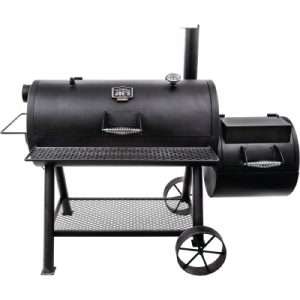
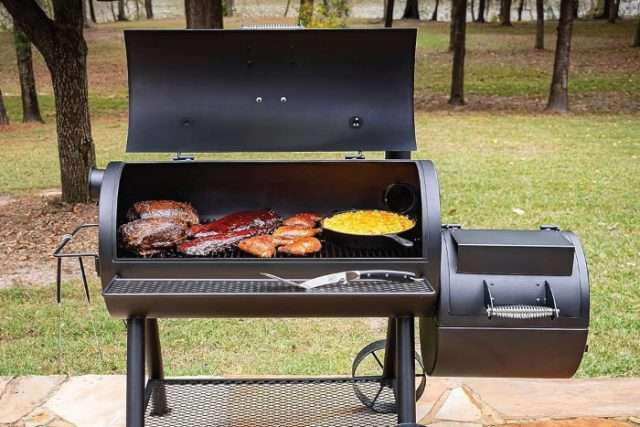
The Oklahoma Joe’s Longhorn Reverse Flow is the larger OKJ option if the Highland feels too small.
It gives you more cooking room, but the overall build, airflow style, smoke leakage, and firebox trade-offs are very similar.
Why this works
- The larger main grate gives you more room for briskets, ribs, pork butts, and bigger cooks.
- The reverse-flow setup helps even out temperatures across the longer cooking chamber.
- It gives you more flexibility when cooking several different foods at once.
- The single-level grate keeps the cooking space practical and easy to use.
- You still get the option to grill or reverse sear in the firebox.
- It makes sense if you regularly cook for groups instead of just small family meals.
Cooking experience
The Longhorn Reverse Flow cooks very much like the Highland Reverse Flow, just with more room to work. You are still managing a live fire, adjusting dampers, feeding it fuel, and paying attention to the weather. It is still a budget offset, not a heavy welded pit.
Where the Longhorn earns its place is space. If you regularly cook bigger briskets, multiple pork butts, several racks of ribs, or a mix of meat and sides, the extra grate area feels useful. You have more room to spread food out instead of crowding the chamber, and that can make bigger cooks less annoying.
Because it is longer, the reverse-flow setup matters even more. It helps keep the cooking chamber more usable from end to end instead of making you fight a harsh firebox-side hot spot the whole time. In good weather, it can hold a steady enough temperature for proper low and slow BBQ. In bad weather, expect to burn more fuel and check it more often.
The downsides are mostly the same as the Highland. It will leak smoke unless you seal it. The firebox paint can flake. The steel is thinner than premium offsets, so cold and wind affect it. And because it is bigger, it takes up more space and can use more fuel than the Highland.
If you mostly cook for your family, I would not buy the Longhorn just because it looks more serious. The Highland Reverse Flow is easier to justify for regular backyard use. But, if you often wish you had more grate space, the Longhorn Reverse Flow is the OKJ upgrade that makes the most sense.
What About the Regular Oklahoma Joe’s Longhorn?
The regular Longhorn is the larger standard-flow version. It makes sense if you want the extra cooking room but do not care about reverse flow, or if the regular Longhorn is priced better than the Longhorn Reverse Flow at the time you buy.
Just keep in mind that, like the regular Highland, it will have more of a natural hot side and cooler side than the reverse-flow version. That is not necessarily bad if you know how to use zones, but the reverse-flow version is the more forgiving choice for most people.
What to expect
- More cooking space than the Highland models
- Similar build quality and trade-offs to the Highland
- Better for bigger briskets, rib cooks, and entertaining
- Reverse-flow setup helps make the larger chamber more usable
- More backyard space needed
- More fuel use than a smaller offset
Pros
- Larger main cooking chamber
- Reverse-flow layout helps temperature balance
- Good option for bigger family or group cooks
- Single-level grate is practical
- Can produce proper wood-smoked BBQ
- Same familiar OKJ design as the Highland range
Cons
- Not much different from the Highland except size
- Bigger footprint
- Uses more fuel
- Still leaks smoke unless sealed
- Firebox paint may flake
- Overkill for small cooks
Who it's best for
Someone who likes the Highland Reverse Flow idea but regularly needs more space.
Who should skip it
If you mostly cook smaller meals.
Also available at: Walmart

Best Vertical Offset
Dyna-Glo Signature Series Vertical Offset
The Dyna-Glo Signature Series Vertical Offset is the compact option if you want offset-style cooking without a long barrel smoker.
It gives you vertical rack space, built-in hangers, and a smaller footprint, but it is not the same as cooking on a classic horizontal offset.
Why this works
- The vertical body gives you a lot of rack space without needing a wide backyard setup.
- It has built-in hangers that are useful for sausages, ribs, and similar cooks.
- The slightly heavier Signature Series design holds heat better than the thinner Dyna-Glo vertical models.
- It can hold a steady temperature once sealed properly.
- The rack layout gives you flexibility for different foods.
- It is a better vertical offset option than forcing a horizontal smoker into a space where it does not fit.
Cooking experience
The Dyna-Glo Signature Vertical can work really well for the price, but I would not run it straight out of the box and expect it to behave like a sealed cabinet smoker. It needs gasket work. The doors and joins can leak, and the split firebox design gives heat and smoke more places to escape before they even reach the cooking chamber.
Once sealed properly, it holds temperature impressively well for a cheap offset. You still need to watch the fire, make adjustments, and keep an eye on airflow, but it is perfectly doable. Like all offsets, it is not set and forget. A wireless smoker thermometer is a much better choice than relying on the built-in gauge.
Inside, you get five chrome-plated racks. The rounded rack shape is more usable than it looks, although it is not ideal for full racks of ribs or whole briskets unless you cut them down. If fitting large ribs or brisket flat is your priority, a wider vertical smoker or a horizontal offset is easier to work with.
The fixed sausage hooks up the top are a genuinely useful feature. They help you make better use of the vertical space and are handy for sausages, hanging ribs, or similar foods.
The firebox is the part I like least. The split design is meant to help with cleaning, but it also creates more leak points. There is not a huge amount of room in there either, so you need to use decent fuel and keep ash from clogging the fire. A lot of people add a charcoal basket to hold the coals together and improve airflow. I have not personally used this exact smoker with a charcoal basket, but I do like them on other smokers, especially when ash buildup starts choking the fire.
You also get a small grate for grilling in the firebox. It technically works, but it sits low. It is a good height for kids to help with a few small grilling jobs, but most adults are not going to love cooking steaks down there for long.
What to expect
- More vertical rack space than a small horizontal offset
- Better with gasket added around the doors and firebox joins
- Built-in hangers are useful for sausages and ribs
- Narrower racks are less ideal for whole briskets or full ribs
- Firebox can clog with ash if airflow is not managed
- Uses noticeably more fuel in cold weather
Pros
- Good vertical capacity for the price
- Holds a steady temperature once sealed
- Built-in hangers add useful cooking options
- Smaller footprint than a horizontal offset
- Decent quality for this price bracket
- Useful if you cook lots of smaller items across racks
Cons
- Needs gasket work to stop smoke leaks
- Split firebox design creates extra leak points
- Firebox can clog with ash
- Built-in thermometer is not reliable
- Chrome-plated racks are not my favorite
- Not the classic horizontal offset experience
Who it's best for
Someone who wants offset-style cooking with more rack space and a smaller footprint.
Who should skip it
If you want to cook large briskets or full racks of ribs flat across a wide horizontal grate.
Also available at: Walmart
What About the Old Country Pecos?
The Old Country Pecos is one of the few other offsets in this price range that I’d seriously look at, especially if you want something that feels more like a welded backyard pit than a bolt-together big-box offset.
I’m not making it one of the main picks here because availability and buying options are not as straightforward for every reader. But, if you live somewhere that sells Old Country pits locally and you can inspect one in person, the Pecos is worth knowing about.
For most online buyers, the Oklahoma Joe’s Highland and Longhorn models are easier to recommend because they are more widely available and easier to compare. But the Pecos is one of the few non-OKJ offsets under $1000 that belongs in the conversation.
What You Give Up Under $1000
You can cook great food on an offset smoker under $1000, but you need realistic expectations.
Do Not Get Thick Premium Steel
This is the biggest difference between a budget offset and a serious backyard pit. Thicker steel holds heat better, recovers faster, uses less fuel, and is less affected by wind and cold.
Under $1000, the steel is thinner. That does not mean the smoker is useless. It just means you will work harder to keep it steady.
You Will Probably Need to Seal It
Budget offsets leak smoke. Some leak a little. Some leak a lot.
A gasket around the cooking chamber door, firebox door, and obvious joins can make a real difference. It is one of the cheapest and most useful upgrades you can do.
You Need a Proper Thermometer
Do not trust the built-in lid thermometer.
It is usually in the wrong place, often inaccurate, and does not tell you what is happening at grate level where the food actually sits. Use a wireless smoker thermometer with an ambient probe inside the cooking chamber. Here’s our favorite wireless smoker thermometers.
You Will Use More Fuel in Bad Weather
Wind, cold, and rain make a noticeable difference on thinner offset smokers.
You can still cook in bad weather, but expect to add fuel more often and make more vent adjustments. If you live somewhere cold or windy, this matters.
You Need to Maintain the Firebox
Paint flaking, surface rust, ash buildup, and moisture are normal problems on cheaper offsets.
Keep the smoker covered, dry it properly, clean out ash after cooks, and treat rust spots early. Ash holds moisture, and moisture is what destroys cheap fireboxes faster than anything.
Buying Guide: How to Choose an Offset Smoker Under $1000
Do You Want Reverse Flow or Traditional Offset Cooking?
Reverse flow is usually easier for beginners because it helps even out the heat across the cooking chamber. That is why I’d start most people with the Oklahoma Joe’s Highland Reverse Flow.
Traditional offset cooking gives you more of a natural hot side and cooler side. Some people like that because you can use those zones intentionally. But, it takes more attention.
If you are new to offsets, reverse flow is the easier starting point. If you like managing zones and want the cheapest option, the regular Highland makes sense.
Highland or Longhorn?
This is mostly a size question.
The Highland models are the better fit for most backyard cooks. They are easier to fit in a normal outdoor area, still have enough room for brisket, ribs, pork, chicken, and sausages, and they do not feel as oversized for regular family meals.
The Longhorn models make more sense if you regularly cook bigger batches. If you often want to run multiple pork butts, several racks of ribs, large briskets, or a mix of mains and sides, the extra room is useful.
If the prices are close, choose based on how you cook:
- Highland Reverse Flow for most people
- Highland for the cheapest sensible OKJ offset
- Longhorn Reverse Flow for bigger cooks with easier temperature balance
- Longhorn for bigger cooks in a standard-flow setup
How Much Food Are You Actually Cooking?
Do not buy the biggest smoker just because it looks more serious.
A larger offset takes up more room, uses more fuel, and can be more work to manage. If you usually cook for your family and the occasional small gathering, the Highland size is enough.
Step up to the Longhorn only if you regularly cook larger batches. The extra space is useful, but only if you actually use it.
Do You Want Horizontal Space or Vertical Rack Space?
Horizontal offsets are better if you want to cook briskets, ribs, pork butts, chickens, and larger cuts on one open grate.
Vertical offsets are better if you want to stack food on racks, hang sausages, or save backyard space. But, narrow vertical racks can be awkward for long cuts unless you cut or bend them.
If you want the classic offset experience, choose horizontal. If you want more rack capacity in a smaller footprint, look at the Dyna-Glo vertical.
Are You Happy Doing Small Mods?
At this price level, you should be.
A gasket is the big one. Some people also add door clamps, charcoal baskets, better thermometers, or tuning plates depending on the smoker.
You do not have to turn it into a full project. But, if the idea of sealing doors or touching up firebox paint annoys you, an offset under $1000 might frustrate you.
Are You Sure You Want an Offset?
Offsets are fun. They produce proper wood-smoked flavor. They also take effort.
If you want easier cooking, a pellet smoker might suit you better. You will not get quite the same fire management or smoke profile, but you will get much easier temperature control. You can read more about the difference in our pellet smoker vs offset smoker comparison.
If you want strong smoke flavor but less firebox management, a charcoal smoker could also be worth considering.
Quick Reality Check
Before buying an offset smoker under $1000, remember:
- It will not cook like a $3000 pit.
- You need to manage a real fire.
- A gasket is usually worth adding.
- The built-in thermometer is not enough.
- Thin steel uses more fuel in cold or windy weather.
- Firebox paint can flake.
- You need to clean ash out properly.
- The best offset is the one that fits how much food you actually cook.
Common Mistakes When Buying a Mid-Range Offset Smoker
- Buying the biggest offset even though you usually cook small meals
- Choosing a cheap offset without thinking about smoke leaks
- Expecting it to run like a pellet smoker
- Trusting the built-in lid thermometer
- Using poor fuel and wondering why the fire is dirty or unstable
- Letting ash sit in the firebox after cooks
- Ignoring rust until it spreads
- Buying a vertical offset when you mainly want to cook whole briskets flat
- Buying a standard-flow offset when you really want easier temperature balance
- Thinking a cheap offset will magically fix poor brisket technique
FAQs About the Best Offset Smokers Under $1000
What is the best offset smoker under $1000 for most people?
For most backyard cooks, I’d choose the Oklahoma Joe’s Highland Reverse Flow. It is a practical size, the reverse-flow setup is more forgiving, and it gives you a real offset cooking experience without stepping into premium pit pricing.
Is the Oklahoma Joe’s Highland or Longhorn better?
The Highland is better for most people because it is smaller, easier to fit in a backyard, and still has enough room for regular BBQ. The Longhorn is better if you regularly cook larger batches and need more grate space.
Is the Longhorn Reverse Flow worth it over the Highland Reverse Flow?
It is worth it if you genuinely need the extra cooking space. The cooking experience and trade-offs are similar, so I would not step up just because it looks bigger. Choose the Longhorn Reverse Flow if you regularly cook big briskets, multiple pork butts, or larger rib cooks.
Is reverse flow better than a regular offset?
Reverse flow is not automatically better, but it is usually easier to manage because it helps even out the heat across the cooking chamber. A regular offset gives you more natural hot and cool zones, which can be useful once you know how to cook with them.
Read more about offset smokers vs reverse flow offset smokers in our guide.
Are offset smokers under $1000 good for beginners?
They can be, as long as you want to learn fire management. If you want set-and-forget cooking, an offset is not the easiest beginner smoker. But, if you want to understand wood, charcoal, airflow, and real smoke flavor, they are a good way to learn.
Is a vertical offset better than a horizontal offset?
A vertical offset is better if you want more rack space in a smaller footprint. A horizontal offset is better if you want the classic stick burner layout and more open grate space for brisket, ribs, pork, and chicken.
Should I buy an offset smoker under $500 or under $1000?
If your budget is tight, there are usable cheap offsets under $500. But, under $1000 gives you better choices, especially with the Oklahoma Joe’s Highland and Longhorn models. If you are comparing both price brackets, read our best offset smokers under $500 guide as well.
Final Thoughts
For most backyard cooks, I’d start with the Oklahoma Joe’s Highland Reverse Flow. It is not perfect, but it gives you the most sensible mix of size, price, and easier heat management in this under-$1000 bracket.
If you want to spend less, the regular Oklahoma Joe’s Highland is the value pick. If you want more cooking space, step up to the Oklahoma Joe’s Longhorn Reverse Flow. And, if you want vertical rack space with a smaller footprint, the Dyna-Glo Signature Series Vertical Offset is the one I’d look at instead.
Just be realistic. At this price, you are not buying a thick steel heirloom pit. You are buying a budget-friendly offset that can still make great BBQ if you are willing to manage the fire, seal the leaks, use good fuel, and look after it properly.

Jared Brown is a barbecue enthusiast with hands-on experience across a wide range of grills, smokers, and outdoor cooking setups. He enjoys testing different styles of barbecue and helping readers choose equipment that suits the way they actually want to cook, rather than chasing a one-size-fits-all answer. His practical, open-minded approach makes him a trusted voice for backyard cooks looking for honest guidance and better results.