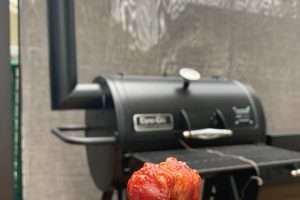
Most pellet smokers can cook burgers at 450–500°F. But that does not necessarily mean they grill particularly well.
Food is normally separated from the pellet fire by a solid drip tray and heat deflector, making the cooking process closer to using a smoky outdoor oven than grilling directly over gas or charcoal.
The pellet grills below are different. Each gives you either direct access to the pellet flame, a genuinely high-temperature grilling mode, a separate grilling chamber, or a dedicated side burner that can put a proper crust on a steak.
For most people, the Weber Searwood 600 is the best overall choice. Its open internal design creates usable high heat across the full main grate, rather than concentrating it over one small opening above the firepot.
Burning Brisket is reader-supported. When you buy through links on our site, we may earn an affiliate commission. Read our affiliate policy to learn more.
Quick Picks: The Best Pellet Smokers for Grilling
🥇 Best Overall Smoke + Grill
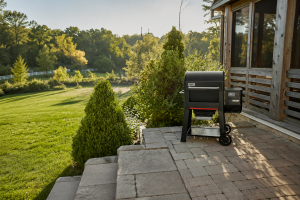
IF YOU WANT: One pellet grill that can smoke and grill across the full grate without an extra gas burner.
🔥 BEST FOR SERIOUS GRILLING
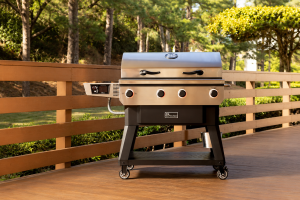
IF YOU WANT: Much higher heat and an open-lid grilling experience without giving up pellet-fired smoking.
🏆 BEST PREMIUM TWO-ZONE
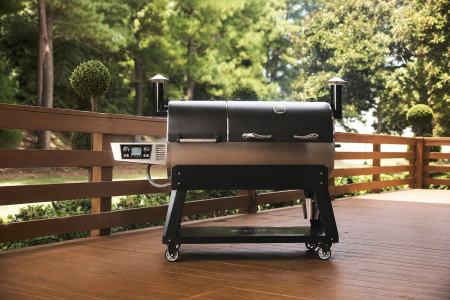
IF YOU WANT: Separate smoking and grilling chambers that can run at different temperatures.
💰 BEST VALUE
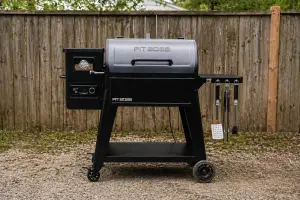
IF YOU WANT: A large pellet smoker with direct-flame access without paying for a premium two-chamber design.
🌲 BEST FOR SMOKE FLAVOR
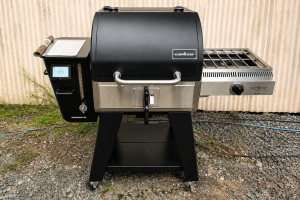
IF YOU WANT: Stronger smoke from wood chunks or charcoal, plus a separate gas burner for reverse-searing steaks.
Table of Contents
Best Pellet Smokers for Grilling Compared
| Pellet Grill | Grilling Setup | Cooking Area | Best For | Main Reason to Buy |
|---|---|---|---|---|
| Weber Searwood 600 | Full-grate DirectFlame cooking | 648 sq. in. | Most people | Grills properly without an extra burner |
| recteq X-Fire Pro 825 | Adjustable open-lid flame grilling | 861 sq. in. | Serious grilling | Much higher heat than a standard pellet grill |
| recteq DualFire 1200 | Separate smoking and grilling chambers | 1,264 sq. in. | Premium versatility | Smoke and grill at different temperatures |
| Pit Boss Navigator 850 Connected | Sliding firepot access | 932 sq. in. | Lower-cost direct flame | Large smoker with a useful searing zone |
| Camp Chef Woodwind Pro 24 with Sidekick | Pellet smoker plus propane burner | 811 sq. in. plus Sidekick | Smoke flavor | Wood or charcoal smoke with separate searing |
What to Expect From a Pellet Smoker That Grills
A properly designed pellet grill can do a much better job of grilling than the average pellet smoker. But there are still some trade-offs to understand.
- Pellet grills are easier to run than charcoal, kamado, or offset smokers.
- Direct-flame designs can create better browning and grill marks than indirect pellet heat.
- The amount of usable direct-heat space varies considerably between models.
- Slide-open firepot systems usually only heat a small section of the grate properly.
- Very high pellet-grill temperatures use pellets quickly.
- Fatty food can cause flare-ups when it is cooked directly over the pellet fire.
- Pellet grilling still tastes different from cooking over a full bed of charcoal.
- Some combination systems use propane for grilling and pellets for smoking.
- Electricity is required to run the controller, fan, igniter, and auger.
If grilling is only an occasional extra, a small flame-broiling area may be enough. If you want to replace your gas grill completely, full-grate or dedicated high-heat cooking matters much more.
What About Traeger?
Traeger pellet smokers are primarily indirect cookers.
They can roast chicken, cook burgers, and finish steaks at higher temperatures. However, they generally do not expose food directly to the pellet flame or provide the same grilling setup as the Searwood, X-Fire, DualFire, or Navigator.
That does not make Traeger a poor choice. It simply means other models are a better fit for this specific guide.
For a broader selection that focuses more heavily on smoking performance, see my guide to the best pellet smokers.
How I Chose These Pellet Grills
I have cooked on a lot of pellet smokers over the years, including the recteq DualFire, recteq Bullseye, Pit Boss Navigator, Camp Chef pellet grills, Traeger, and several Z Grills models.

That experience has shown me that the maximum temperature printed on the box does not tell you whether a pellet smoker will grill well. The internal layout, distance from the fire, size of the direct-heat zone, grease management, and how quickly the grill recovers after opening the lid all matter.
The newer Weber Searwood and recteq X-Fire have been selected based on their design, independent cooking tests, owner feedback, and how their grilling systems compare with the pellet grills I have used. The Weber uses a more open full-grate DirectFlame arrangement, while the X-Fire has a dedicated high-heat mode with adjustable flame intensity.
I have kept the list tight on purpose. These are not simply five pellet smokers that reach 500°F. Each has a specific reason why it is better suited to someone who genuinely wants to grill as well as smoke.
The Best Pellet Smokers for Grilling
The picks below are ranked according to grilling ability, smoking performance, usable cooking space, practicality, and whether the additional features justify the price.
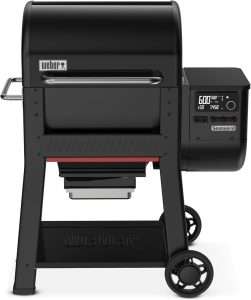
Best Overall
Weber Searwood 600
The Weber Searwood 600 is my best overall pick because it tackles the biggest weakness of an ordinary pellet grill to give you open flame grilling.
It’s not the hottest model here, but it offers a more practical balance of full-grate grilling, low-and-slow smoking, manageable size, and price than the more specialized recteq options.
Why this works
- Its open internal design allows stronger heat to reach the full main cooking grate.
- The 600°F maximum is hot enough for burgers, chicken, steaks, and reverse-searing.
- You do not need a separate propane bottle or bolt-on side burner.
- The PID controller helps it recover after the lid has been opened.
- It still operates like an easy set-and-forget pellet smoker at lower temperatures.
- Optional griddle and rotisserie accessories give it more uses than smoking alone.
Cooking experience
The main advantage of the Searwood is not simply that Weber has put “600°F” on the controller. Plenty of pellet grills claim reasonably high maximum temperatures but still shield the food behind a broad drip tray.
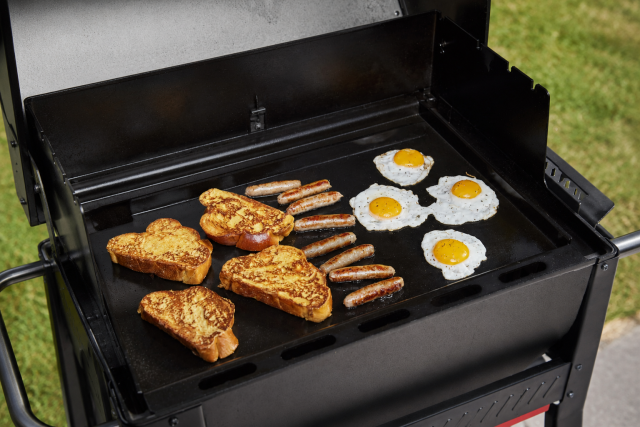
Weber has opened up the design underneath the grate so more heat and flame can reach the cooking surface. That makes the whole bottom grate more useful for burgers, chicken, sausages, and steaks instead of creating one tiny searing spot directly above the firepot.
Independent testing has found that it can produce proper browning and searing, although it is not completely even from edge to edge. There are still warmer and cooler areas to learn, particularly when the grill is loaded up. That is normal for most outdoor grills, but you may need to move or rotate food during larger cooks.
At lower temperatures, the Searwood behaves more like a conventional pellet smoker. You can load the hopper, set the controller, and leave it to hold the cooking temperature without managing a charcoal or wood fire.
Its 648-square-inch total capacity is enough for normal family cooking and moderate entertaining. The larger Searwood XL is available if you regularly cook for a crowd, but the standard 600 is a more sensible fit for most backyards.
What to expect
- Better full-grate grilling than most conventional pellet smokers
- Enough space for regular family BBQ
- Fast recovery after opening the lid
- Some hotter and cooler sections across the grate
- Shelving and some accessories may cost extra
- Stronger grilling than most pellet cookers, but still not identical to charcoal
Pros
- Full-grate high-heat cooking
- No propane burner required
- 180–600°F temperature range
- WiFi and Bluetooth control
- Simple ash and grease cleanout
- Optional griddle and rotisserie accessories
Cons
- Side and front shelving may be sold separately
- Not as hot as the recteq X-Fire
- Some temperature variation across the grate
Who it's best for
Anyone who wants one reasonably sized pellet grill that can handle everyday grilling as well as low-and-slow BBQ.
Who should skip it
Anyone who wants the most aggressive open-flame searing possible or needs two independently controlled cooking chambers.
Also available at: Walmart
Best for Serious Grilling
recteq X-Fire Pro 825
The recteq X-Fire Pro 825 is the strongest choice for someone who grills frequently and does not want the usual 500°F pellet-grill compromise.
Its dedicated Grill Mode is designed to work more like a traditional open-lid grill, while Smoke Mode converts it back into a PID-controlled pellet smoker.
Why this works
- Grill Mode creates much more intense heat than an ordinary pellet smoker.
- Adaptive Sear Control lets you adjust the flame instead of having one fixed high setting.
- The broad grate provides more usable grilling space than a small firepot opening.
- Smoke Mode still gives you automated pellet-fed low-and-slow cooking.
- Stainless steel is used throughout much of the cooking chamber and internal hardware.
- Its 20-pound hopper is large enough for normal overnight cooks.
Cooking experience
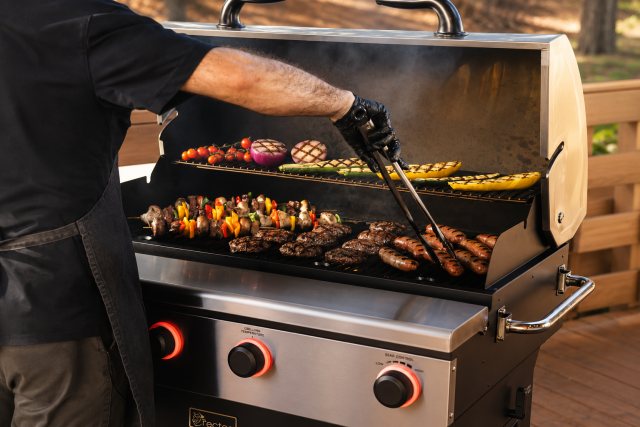
The X-Fire is a very different proposition from simply sliding open a plate above a small pellet fire. Its dedicated grilling mode is intended to be used with the lid open, giving you the fast, active cooking style you would normally associate with a gas grill.
Recteq states that it can reach up to 1,250°F. That figure will vary with pellet type, weather, preheating, and where the temperature is measured, but independent cooking tests confirm that the grill is capable of extremely high grate-level temperatures and a much stronger crust than most pellet smokers can produce.
That much heat also means you have to pay attention. This is not a grill to leave unattended in high-heat mode while fatty burgers or steaks sit directly above the fire. Flare-ups, rapid browning, and localized hot areas are part of the experience.
For smoking, the X-Fire changes back into a more conventional pellet-cooking setup. Its minimum setting is 225°F, which is fine for most brisket, ribs, pork, and chicken cooks, although it does not go quite as low as the Searwood or DualFire.
The X-Fire makes the most sense when grilling is at least as important to you as smoking. If you mostly cook low and slow and only reverse-sear two steaks occasionally, it may be more grill—and more expense—than you need.
What to expect
- Much stronger high-heat grilling than a standard pellet smoker
- A more active open-lid grilling experience
- Faster pellet use at extreme temperatures
- Some areas of the grate will run hotter than others
- A 225°F minimum smoking temperature
- More attention required in Grill Mode
Pros
- Extremely high maximum heat
- Adjustable flame intensity
- Large usable grilling surface
- Dedicated Grill and Smoke modes
- PID temperature control
- WiFi connectivity
- Extensive stainless steel construction
Cons
- Higher price
- Very high heat requires close supervision
- Minimum smoking temperature is 225°F
- Not necessary for occasional searing
Who it's best for
Anyone who grills steaks, burgers, chops, and chicken frequently but still wants the convenience of a pellet smoker.
Who should skip it
Anyone who mainly cooks low and slow or only needs a small searing area for occasional reverse-searing.
Best Premium Two-Zone Pellet Grill
recteq DualFire 1200
The recteq DualFire 1200 is the most complete two-zone pellet solution here, with one chamber designed for indirect smoking and another for higher-heat grilling.
It is large and expensive, but there is no need to convert the same chamber from smoking to grilling or wait while it climbs from 225°F to searing temperature.
Why this works
- Separate chambers let you smoke and grill at the same time.
- The grilling side provides substantially more room than a small firepot opening.
- Both sides run on hardwood pellets, so you do not need propane.
- You can reverse-sear without disrupting the low-and-slow side.
- The large shared hopper supports long cooks without constant refilling.
- Stainless steel grates and internal components are built for repeated high-heat use.
Cooking experience
The DualFire is one of the few pellet grills I have used that feels properly set up to do both jobs instead of merely allowing you to slide open a small section of the drip tray.
The large chamber on the right works as the main smoker. Its PID controller holds a very steady temperature, making it easy to smoke brisket, pork, ribs, or several trays of chicken without hovering beside the grill.
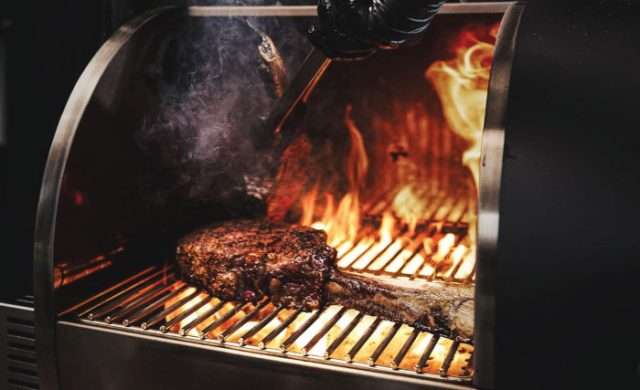
The smaller left chamber is permanently set up for direct heat. At maximum output, you can see and feel the flames working through the grilling side after it has had time to preheat. It produces much better browning than trying to sear food over the indirect side.
What I particularly like is being able to run both chambers at once. You can have a long cook going on the right while using the left side to make lunch, grill sides, or bring it up to temperature for a reverse-sear.
There is no awkward transition where you remove the meat, change the internal setup, and wait for one large chamber to climb several hundred degrees.
The trade-off is that the cooking space is divided. You cannot turn all 1,264 square inches into one uninterrupted smoking chamber or one full-width direct grill. You need to be happy with the permanent split.
What to expect
- Independent smoking and grilling temperatures
- Plenty of total cooking capacity
- A practical setup for reverse-searing
- Very steady temperatures on the smoking side
- A permanently divided cooking area
- Considerably more backyard space and money required
Pros
- Separate grilling and smoking chambers
- Both chambers can operate simultaneously
- All-pellet cooking without propane
- Strong PID temperature control
- Stainless steel cooking grates
- Long warranty
Cons
- Most expensive option here
- Large and heavy
- Cooking capacity cannot be used as one continuous chamber
Who it's best for
Anyone who regularly smokes and grills at the same time and is prepared to pay for a permanent two-zone setup.
Who should skip it
Anyone with limited space, a tighter budget, or no real need to operate two cooking chambers simultaneously.
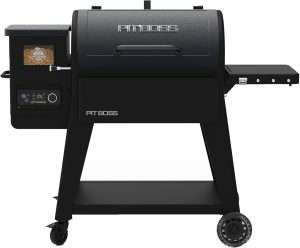
Best Value
Pit Boss Navigator 850 Connected
The Pit Boss Navigator 850 Connected gives you a large pellet smoker and direct access to the firepot for considerably less than the premium recteq models.
The exposed-flame area is small, but it works well enough for a few steaks, burgers, or sausages and makes the Navigator more versatile than a fully indirect pellet smoker.
Why this works
- The Flame Broiler lever opens the drip tray directly above the pellet fire.
- Its porcelain-coated grates retain heat well for browning and grill marks.
- The 932-square-inch total capacity gives you plenty of smoking room.
- The 30-pound hopper is useful for long or overnight cooks.
- WiFi and Bluetooth are now included on the current Connected model.
- Its lower price makes direct-flame pellet grilling more accessible.
Cooking experience
I used the earlier Navigator 850 for several months and enjoyed grilling on it. Opening the Flame Broiler lets the pellet fire lick through the bottom grate, giving you better marks and a little more wood-fired character than cooking completely indirectly.
The important limitation is the size of that fire. The flames are concentrated over the central firepot, so only a fraction of the 932-square-inch cooking surface becomes a true direct-grilling zone.

It works well when you have several steaks or a batch of sausages that you can keep moving through the hotter center. It is less convincing if you want to spread burgers across the entire grate and have them all cook like they are sitting over a conventional gas or charcoal fire.
The older Navigator I used did not have PID temperature control and would swing by around 30°F during low-and-slow cooks. That was not enough to ruin the food, and the repeated pellet cycles produced a decent amount of smoke, but it was not as steady as the recteqs.
The current Navigator 850 Connected has an updated controller with WiFi and Bluetooth, plus a larger 30-pound hopper and 932 square inches of advertised cooking space. Pit Boss rates the normal pellet-cooking range at 180–500°F, with much higher temperatures available directly above the open Flame Broiler.
One issue I had with the Navigator design was the rear venting. We cook in a lot of wind and rain, and the vents allowed more weather into the cooking chamber than I would want. Strong wind also had a noticeable effect on temperature. That will matter less in a sheltered backyard, but it is worth considering if your grill sits in an exposed area.
Read my full Pit Boss Navigator review for more detail on its cooking behavior and practical limitations.

What to expect
- Lots of room for smoking
- A small but genuinely hot direct-flame area
- More food movement when grilling for a group
- Heavy overall construction
- Better connectivity on the current model
- More exposure to wind through the rear vents
Pros
- Direct access to the pellet flame
- Large overall cooking capacity
- WiFi and Bluetooth controller
- Good build quality
- Five-year warranty
- Lower price than the premium picks
Cons
- Direct-flame area is small
- Rear vents are less suitable for exposed weather
- Heat is highly concentrated above the firepot
Who it's best for
Anyone who wants a large, reasonably priced pellet smoker with enough direct-flame capability for smaller grilling sessions.
Who should skip it
Anyone who wants even high heat across the full grate or regularly grills large batches of food.
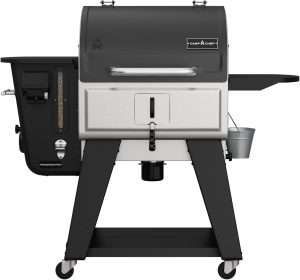
Best for Smoke Flavor and Reverse-Searing
Camp Chef Woodwind Pro 24 with Sidekick
The Camp Chef Woodwind Pro 24 with Sidekick takes a different approach. The main chamber focuses on smoking, while the optional propane Sidekick handles high-heat grilling and searing.
It is the strongest choice here if richer smoke flavor matters more than keeping the entire system wood-pellet powered.
Why this works
- The Smoke Box lets you burn wood chunks, wood chips, or charcoal alongside the pellets.
- The Sidekick provides concentrated propane heat for fast searing.
- You can preheat the Sidekick while meat finishes slowly in the main chamber.
- Adjustable smoke settings give you more control over the pellet-fire smoke cycle.
- The main smoker provides enough space for family cooking and entertaining.
- Camp Chef’s ash cleanout system makes regular maintenance easier.
Cooking experience
The Woodwind Pro should not be confused with older Camp Chef models that used the company’s Slide and Grill system inside the main pellet chamber.
The current Woodwind Pro is primarily an indirect pellet smoker. Its standout feature is the front Smoke Box, which allows you to add wood chunks, chips, or charcoal directly to the cook.

That solves one of my main complaints with pellet smokers: the smoke can be too light, especially once the grill has stabilized and the pellets are burning efficiently.
The regular pellet system still provides the steady background heat. The added wood or charcoal gives you a stronger and more distinctive smoke profile without forcing you to control an entire offset-style fire.
You do need to interact with it more than a completely hands-off pellet smoker. Wood chunks burn down and need to be replaced if you want that stronger smoke to continue through a long cook. But you can also use the Smoke Box only during the first few hours, when meat takes on most of its smoke flavor.
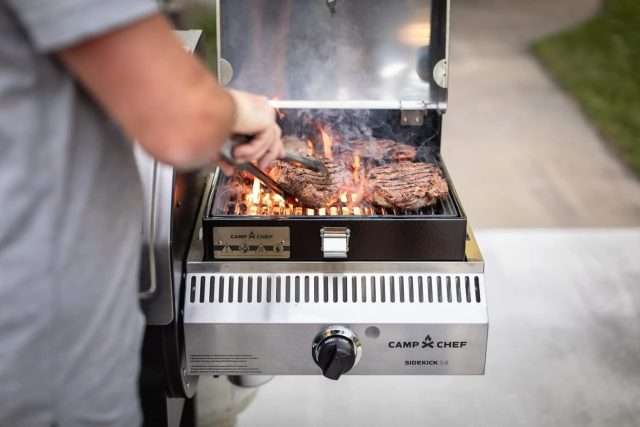
For grilling, the optional Sidekick attaches to the side of the smoker and runs from a propane bottle. It provides a much more concentrated searing surface than trying to bring the entire Woodwind chamber up to maximum temperature.
That setup works particularly well for reverse-searing. You can smoke steaks slowly in the main chamber while the Sidekick preheats, then move them directly onto the gas-powered grate to finish.
The downside is capacity. The Sidekick is useful for a few steaks, burgers, or chops, but it does not provide the same grilling space as the Weber Searwood or recteq X-Fire. You also have two fuel types to store and an attachment that adds to the total cost and width.
What to expect
- More noticeable smoke flavor than most pellet grills
- Extra involvement when adding wood chunks
- A small but powerful separate grilling surface
- Propane rather than pellet-fired searing
- Easy reverse-searing without changing the main chamber
- Additional cost for the Sidekick attachment
Pros
- Smoke Box accepts wood and charcoal
- Adjustable pellet smoke settings
- Dedicated high-heat side burner
- Strong reverse-searing setup
- WiFi control
Cons
- Sidekick costs extra
- Requires pellets and propane
- Smaller grilling surface than the Weber or X-Fire
- Main chamber is not an open-flame grill
Who it's best for
Anyone who prioritizes stronger smoke flavor but still wants a convenient built-in way to sear a few steaks or burgers.
Who should skip it
Anyone who wants a single-fuel system or needs a large full-width grilling surface.
What About the recteq Bullseye?
The recteq Bullseye is still worth considering if you want something smaller and less expensive than the X-Fire.
Its kettle-style body, central pellet fire, and perforated heat deflector make it feel more like a grill than a conventional barrel-shaped pellet smoker. The standard model can get considerably hotter than most pellet grills, while the Bullseye Deluxe adds WiFi, upgraded grates, and a claimed maximum temperature of 1,000°F.
I have enjoyed using the Bullseye. It heats hard, produces good results, and provides a lot of cooking capability without taking up much space.
The limitation is that its heat is highly concentrated in the middle, and its 380-square-inch cooking area is better suited to smaller meals than loading up for a large BBQ.

It also feels more grill-first than smoker-first. You can absolutely cook ribs, pork, chicken, and other low-and-slow food on it, but the larger picks above provide a more conventional smoking layout and more room for big cuts.
Choose the Bullseye if: You usually cook for a smaller household, grill more often than you smoke, and want high heat without buying a large pellet cooker.
How to Choose the Best Pellet Smoker for Grilling
Do You Need Full-Grate Heat or Just a Searing Zone?
This is the most important decision.
The Weber Searwood and recteq X-Fire are designed to provide usable grilling heat across a much larger section of the main grate.
The Pit Boss Navigator exposes the fire through a smaller opening in the center. That is useful for reverse-searing or cooking a modest amount of food, but you will need to move food around when grilling for a group.
The DualFire avoids the problem by dedicating an entire separate chamber to grilling, while the Woodwind Pro uses the Sidekick as a second cooking surface.
For two or three steaks, any of these systems can work. For a full grate of burgers, the Searwood, X-Fire, or DualFire makes more sense.
Do You Want to Grill Over Pellets or Propane?
The Searwood, X-Fire, DualFire, and Navigator all use the pellet fire for grilling.
The Woodwind Pro’s best high-heat setup uses the propane Sidekick. That means it does not give you the same all-wood grilling experience, but it heats quickly, is easy to control, and works extremely well for reverse-searing.
There is nothing wrong with using two fuels. The question is whether you want one integrated wood-pellet system or are happy to keep a propane bottle as well.
How Often Will You Actually Grill?
For occasional reverse-searing, the Navigator’s small direct-flame area may be all you need.
For regular family grilling, the Searwood gives you a larger and more forgiving cooking area without pushing the price into specialist territory.
For frequent high-temperature grilling where steaks, burgers, chops, and chicken are just as important as brisket and ribs, the X-Fire is the more capable option.
The DualFire suits someone who regularly needs both modes operating at once. Otherwise, you may be paying for a second chamber that spends most of its life unused.
Is Smoke Flavor More Important Than Maximum Heat?
The Woodwind Pro stands apart because its Smoke Box lets you burn actual wood chunks or charcoal alongside the pellet fire.
That requires slightly more involvement, but it can create a stronger smoke profile than relying on pellets alone.
The other models are easier to leave completely unattended, but their smoke flavor will still generally be lighter than food cooked in an offset or charcoal smoker.
For more information about the fuel itself, see my guide to the best pellets for smoking.
Are You Buying One Main Cooker?
The Searwood is the safest all-round choice for someone replacing both an ordinary pellet smoker and a basic backyard grill.
The X-Fire is better when grilling takes priority.
The DualFire makes sense when you frequently cook different foods at different temperatures.
The Navigator is the budget-conscious compromise.
The Woodwind Pro is best when you care most about low-and-slow smoke quality and only need a smaller searing station.
Quick Reality Check
- Even the best pellet grill will not taste exactly like charcoal.
- Extreme temperatures burn through pellets much faster.
- Direct-flame cooking can cause flare-ups with fatty meat.
- Small firepot openings do not heat the full grate evenly.
- Pellet grills still require electricity.
- WiFi does not improve the food if the underlying grill layout is poor.
- A separate charcoal or gas grill may still be simpler for people who grill far more than they smoke.
Common Mistakes When Buying a Pellet Smoker for Grilling
- Assuming every pellet grill that reaches 500°F can sear properly
- Looking only at the maximum temperature instead of the internal design
- Confusing total cooking capacity with usable direct-flame space
- Buying a huge smoker when you normally cook for two or three people
- Expecting a small firepot opening to grill evenly across the whole grate
- Ignoring how much fuel high-temperature pellet grilling uses
- Forgetting that open-flame cooking needs more attention than low-and-slow smoking
- Paying for two cooking chambers when you will rarely use them simultaneously
- Buying the Woodwind Pro expecting direct pellet-flame grilling in the main chamber
- Choosing based on WiFi rather than heat distribution, layout, and cooking behavior
FAQs About Pellet Smokers for Grilling
What is the best pellet smoker for grilling for most people?
The Weber Searwood 600 is the best fit for most people. It provides stronger full-grate heat than a conventional pellet smoker, reaches 600°F, and does not require a separate propane burner or premium two-chamber setup.
Can a beginner grill on a pellet smoker?
Yes. Pellet smokers automatically control the fire, making them easier to start and regulate than charcoal.
High-heat direct-flame cooking still needs supervision because food can brown quickly and fatty meat may cause flare-ups.
Is the recteq X-Fire better than the Weber Searwood?
The X-Fire is better for very high-temperature grilling and more closely imitates an open-lid gas-grill experience.
The Searwood is less extreme, less expensive, and probably a more balanced smoker-and-grill combination for an average backyard cook.
Can a pellet smoker sear a steak properly?
Some can. The best results come from models with direct flame, a genuinely high-temperature grilling mode, or a separate searing burner.
A standard indirect pellet smoker at 450°F can cook a steak, but it will usually struggle to create the same crust as charcoal, gas, or the specialist pellet grills in this guide.
Is direct-flame pellet grilling safe?
It is safe when the grill is used according to its instructions and kept clean.
Grease buildup, fatty food, and extreme heat can cause flare-ups. Keep the grease system clean, trim excessive fat, leave the lid in the recommended position, and do not leave direct-flame cooks unattended.
Should I reverse-sear steaks on a pellet smoker?
Reverse-searing is one of the best ways to use a pellet smoker for steak.
Cook the meat slowly until it is below your target internal temperature, then finish it over direct flame or on a high-heat burner. My guide to how to reverse-sear on a smoker explains the process in more detail.
Final Thoughts
For most backyard cooks, I would start with the Weber Searwood 600. It offers the most useful balance of full-grate grilling, low-and-slow smoking, straightforward operation, and price.
Choose the recteq X-Fire Pro 825 if grilling performance matters most. Step up to the DualFire 1200 if you want independent smoking and grilling chambers running together. The Pit Boss Navigator 850 Connected is the more affordable direct-flame option, while the Camp Chef Woodwind Pro with Sidekick is the strongest choice for heavier smoke flavor and reverse-searing.
The right pellet grill is not necessarily the one with the highest claimed temperature. It is the one with enough genuinely usable high-heat space for the way you grill, while still giving you the smoking capacity and convenience you actually need.

Kate Brown is the founder of Burning Brisket, where she shares hands-on smoker reviews, barbecue gear guides, and practical tips for backyard BBQ. She has cooked extensively on charcoal, pellet, electric, and kamado smokers, using real-world experience to help beginners choose the right equipment and make better barbecue at home. Her focus is honest, straightforward advice that makes smoking and grilling easier without unnecessary complexity.