Pit Boss and Traeger are two of the most common pellet brands you’ll see, and I’ve used both for years across different pellet smokers.
The short answer is that both work well. I don’t see enough difference in actual cooking results to stay loyal to one brand, and I usually buy whichever is cheaper or easier to get.
The main differences are bag size, dust, pellet condition, flavor options, and price. Traeger pellets often arrive looking a bit cleaner and shinier, while Pit Boss usually gives you bigger bags and more flavor choices.
Burning Brisket is reader-supported. When you buy through links on our site, we may earn an affiliate commission. Read our affiliate policy to learn more.
Quick Verdict - Which Is The Better Pellet?
Both Pit Boss and Traeger pellets work well. I’ve had good cooks with both, and I don’t think most backyard cooks need to overthink this.
Choose PIT BOSS if:
- You want the better bulk-buy option
- You like having more flavor choices
- You want to buy larger bags
- You use a sieve to remove excess dust anyway
- You're looking for the cheapest price per pound
Choose TRAEGER if:
- You want the bag that usually arrives in better condition
- You prefer slightly cleaner-looking pellets
- You want less dust
- You prefer smaller 20 lb bags
- You find a good multi-buy deal or sale price
My honest pick:
If I’m not chasing a specific flavor, I buy whichever is cheaper per pound or easier to get.
Table of Contents
Pit Boss Pellets vs Traeger Pellets: Quick Comparison
| Feature | Pit Boss Pellets | Traeger Pellets | My Take |
|---|---|---|---|
| Best for | Bulk buying and flavor choice | Cleaner bags and consistency | Both cook well |
| Bag size | Commonly sold in 40 lb bags | Commonly sold in 20 lb bags | Pit Boss is easier for bulk buying |
| Price | Often cheaper per pound | Can be good value in multi-buys | Always compare price per pound |
| Dust | Can be a bit higher | Usually lower | A sieve helps with dusty bags |
| Pellet condition | Good, but varies | Usually polished and consistent | Traeger often looks better |
| Flavor options | More options | Fewer core options | Pit Boss wins for variety |
| Heat output | Good | Good | No major difference in normal cooking |
| Smoke flavor | Good | Good | I wouldn’t choose based on flavor alone |
| Overall value | Strong if you cook often | Good if price is close | Depends on current pricing |
Can You Use Pit Boss Pellets in a Traeger?
Yes, you can use Pit Boss pellets in a Traeger.
You can also use Traeger pellets in a Pit Boss.
Pellet smokers don’t require matching-brand pellets. As long as you’re using proper food-grade hardwood pellets made for pellet grills, you don’t need to stick with the smoker manufacturer’s own brand.
That means you can shop based on price per pound, flavor, availability, and bag condition instead of feeling locked into one brand.
Pit Boss vs Traeger Pellets: The Main Differences
A lot of pellet marketing makes it sound like one bag will completely change your BBQ.
In real life, the differences are usually smaller than that.
Good pellets matter. But once you’re choosing between decent hardwood pellets from major brands, I care more about whether they’re dry, clean, easy to store, priced well, and available in the flavor I want.
That matters more than the logo on the bag.
Bag Size and Value
Pit Boss pellets are commonly sold in 40 lb bags. Traeger pellets are usually sold in 20 lb bags, although you can sometimes get multi-buy deals that bring the price down.
So, don’t just look at the price on the bag. Compare the price per pound.
Pit Boss often works out cheaper per pound, especially if you’re buying a 40 lb bag and you cook often enough to use it. But pellet prices change all the time, and Traeger multi-buy deals can narrow the gap.
That said, bigger isn’t always better.
A 20 lb bag is easier to carry, easier to store, and easier to use up before it sits around too long. If you only smoke occasionally, the smaller Traeger bag might suit you better.
If you cook often, the bigger Pit Boss bag is handy.
Dust and Pellet Condition
This is one of the biggest practical differences I’ve noticed between Pit Boss and Traeger pellets.
Pit Boss pellets have worked well for me, but I have had bags with more dust in the bottom. Not every bag. But enough that I notice it.
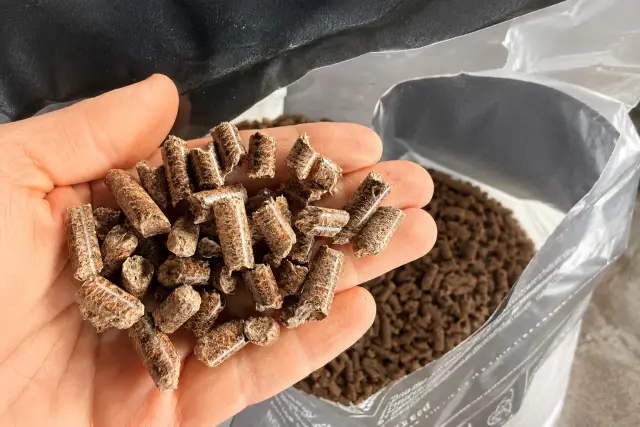
Traeger pellets usually seem a bit cleaner. The pellets often look larger, firmer, shinier, and there tends to be less dust sitting at the bottom of the bag.
That said, I’ve had bad bags of Traeger pellets too. So, I wouldn’t say Traeger is perfect and Pit Boss is dusty. It’s more that Traeger usually feels a bit more consistent when you open the bag.
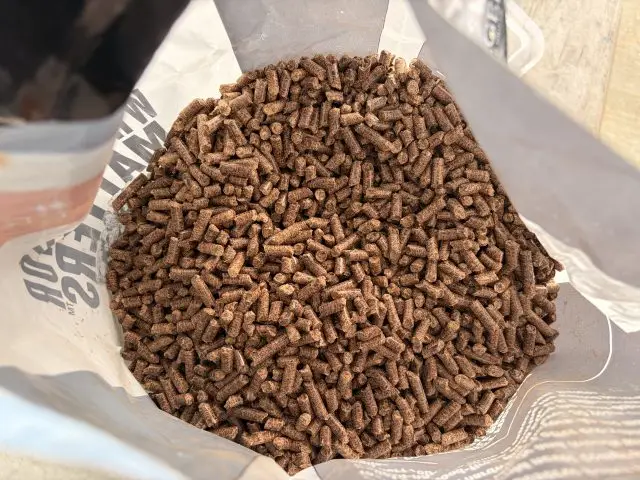
Good pellets should look firm, dry, and slightly shiny. If they’re soft, crumbly, swollen, or breaking apart easily, they’ve probably taken on moisture or been handled badly.
Pit Boss pellets can look good too. I’ve had plenty of bags that were perfectly fine. But the larger bags can sometimes be rougher by the time they’ve been shipped, stored, and moved around.
That’s not necessarily a Pit Boss quality problem. It can just be handling. A 40 lb bag is heavier, and if it gets knocked around, the bottom of the bag can end up with more broken bits and dust.
Either way, I like to check pellets before dumping them into the hopper. If there’s a lot of dust, I’ll sieve them or avoid pouring the dusty bottom section straight into the smoker.
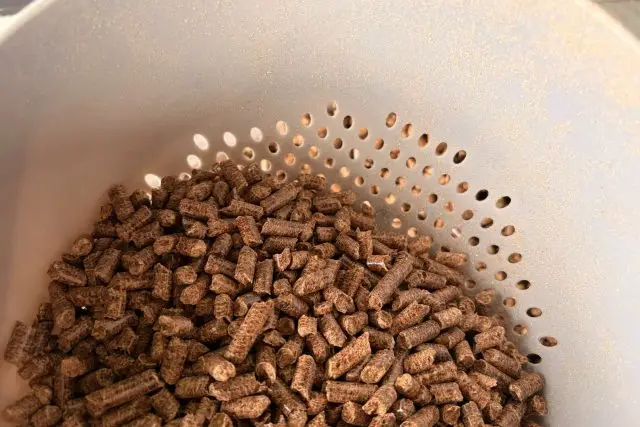
A little dust isn’t the end of the world. But too much dust can make more mess, affect feeding, and just feels like you’re not getting as clean a product.
If Pit Boss is noticeably cheaper per pound and you’re happy to sieve out the dusty bits, I’d still buy Pit Boss without worrying about it.
Heat and Burn Consistency
In actual cooking, I don’t see a big enough difference between Pit Boss and Traeger pellets to worry about.
Both have burned well for me.
Both have held steady heat.
Both have worked for low and slow smoking, and both have kept up when grilling hotter.
I wouldn’t buy Traeger pellets expecting your smoker to suddenly hold temperature better. And I wouldn’t avoid Pit Boss pellets because you’re worried they won’t perform properly.
If your pellet grill is clean, the pellets are dry, and the weather isn’t doing anything ridiculous, both brands should do the job.
Smoke Flavor
This is where I think beginners can overthink things.
Yes, wood type matters. Hickory tastes different from apple. Mesquite is stronger than cherry. Oak is a good all-rounder.
But when you’re comparing two decent pellet brands in similar wood types, the difference usually isn’t dramatic.
I’ve had good smoke flavor from both Pit Boss and Traeger pellets. I wouldn’t say one brand automatically gives better BBQ than the other.
If you want a stronger or different flavor, I’d choose based on the wood blend first, not just the brand.
Good BBQ still comes down to the meat, seasoning, smoker setup, temperature, timing, and knowing when it’s actually done.
Pellets matter, but between these two, I’d focus more on freshness, storage, dust, and price per pound than chasing a massive flavor difference.
Price Per Pound
Pit Boss gives you more options.
That’s useful if you like matching wood flavors to different meats or just want to experiment. Their range usually includes more single woods and blends than Traeger.
Traeger keeps things simpler. That’s not necessarily bad. Most people can do a lot with a signature blend, hickory, apple, cherry, pecan, or mesquite.
But if flavor variety matters to you, Pit Boss has the edge.
Pit Boss Pellets: What I Like and Don’t Like
Pit Boss pellets are a good everyday pellet, especially if you cook often and want a larger bag.
The main advantage is value. Because Pit Boss is commonly sold in 40 lb bags, it often works out cheaper per pound than buying smaller bags. That’s not guaranteed every time, but it’s common enough that I always check Pit Boss when I’m comparing prices.
I’ve used Pit Boss pellets for smoking and hotter grilling, and they’ve performed well in both situations. They hold heat well, feed properly when dry, and give good smoke flavor.
I also like that Pit Boss has a wider range of flavors. If you want to play around with hickory, apple, cherry, mesquite, pecan, competition blends, or something a bit different, Pit Boss gives you plenty of options.
The downside is that I’ve seen more dust in some bags of Pit Boss pellets. Not enough to stop me buying them, but enough that I check the bag before pouring it into the hopper.
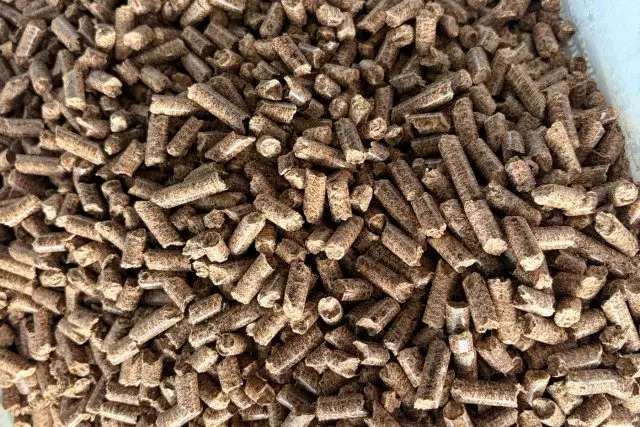
If the pellets look dry, firm, and the price per pound is good, I’d happily use Pit Boss again.
Pit Boss Pellet Pros
- Often cheaper per pound
- Usually better for bulk buying
- More flavor options
- Good heat output
- Works well for smoking and grilling
- Easy to find in many stores
Pit Boss Pellet Cons
- Some bags can have more dust
- Larger bags can be harder to handle
- Bag condition can vary
- Worth sieving if there’s excess dust
Traeger Pellets: What I Like and Don’t Like
Traeger pellets are the cleaner-looking option most of the time.
When I open a good bag of Traeger pellets, they usually look firm, shiny, and fairly uniform. I’ve also found there’s usually less dust in the bottom of the bag compared with Pit Boss.
That doesn’t mean Traeger pellets cook dramatically better. In the smoker, both brands have worked well for me. The difference is more about how the bag looks and feels when you’re filling the hopper.
I also like the smaller 20 lb bags. They’re easier to lift, easier to store, and less annoying if you don’t cook every weekend.

The downside is that Traeger isn’t always the cheapest option per pound. You can sometimes get multi-buy deals that make Traeger more competitive, but if Pit Boss is much cheaper per pound, I don’t think Traeger is automatically worth paying more for.
And while Traeger bags are usually better, I’ve still had the odd bad bag before. So, I wouldn’t treat any pellet brand as completely foolproof.
Traeger Pellet Pros
- Usually cleaner-looking pellets
- Often less dust in the bag
- Firm, shiny pellet texture
- Smaller bags are easy to handle
- Reliable everyday performance
- Multi-buy deals can improve value
Traeger Pellet Cons
- Usually sold in smaller 20 lb bags
- Can cost more per pound
- Fewer flavor options than Pit Boss
- Still possible to get a rough bag
Also available at: Walmart
Pit Boss Pellets vs Traeger Pellets: Which Should You Buy?

Choose Pit Boss Pellets if:
- You want larger bags
- Pit Boss works out cheaper per pound
- You want more flavor choices
- You’re happy to sieve excess dust if needed
- You want a reliable everyday pellet
Skip Pit Boss Pellets if:
- The bag looks crushed or damp
- Traeger is cheaper per pound at the time
- You prefer smaller, easier-to-handle bags
- You don’t cook often enough to use a 40 lb bag quickly

Choose traeger pellets if:
- You want the cleaner-looking bag
- You prefer smaller 20 lb bags
- You’ve had issues with dusty pellets before
- You find a good multi-buy deal
- The price per pound is close to Pit Boss
Skip traeger pellets if:
- They cost much more per pound
- You cook a lot and want bulk bags
- You want more flavor variety
- Pit Boss is cheaper and the bag looks good
Also available at: Walmart
Final Thoughts: My Honest Pick
I don’t think Pit Boss vs Traeger pellets is a comparison worth stressing over.
Both brands have worked well for me, and I’d rather spend my energy choosing the right meat, keeping pellets dry, and running the smoker properly.
If Traeger is only slightly more expensive and I want the cleaner-looking bag, I’ll buy Traeger.
If Pit Boss is cheaper per pound or I want a specific flavor, I’ll buy Pit Boss.
Most of the time, I buy whichever one is cheaper per pound or available.
Don’t Ruin Good Pellets With Bad Storage
Pellet storage matters more than a lot of people think.
Even good pellets can turn into a mess if they absorb moisture. Once a bag is open, don’t leave it sitting in a damp garage or shed.
Keep pellets sealed in a bucket, storage bin, or proper pellet container. If they start swelling, crumbling, or feeling soft, don’t use them. Dry, clean pellets feed better, burn better, and give you fewer problems.
That matters more than whether the bag says Pit Boss or Traeger.
Here’s our guide on how to store your wood pellets properly.
More Pellet Grill Guides
If you’re still working out what to buy or how to get better results from your smoker, these guides might help:
FAQs
Can You Use Pit Boss Pellets in a Traeger?
Yes. You can use Pit Boss pellets in a Traeger, as long as they’re proper food-grade hardwood pellets made for pellet grills.
You don’t need to match the pellet brand to the smoker brand.
Can You Use Traeger Pellets in a Pit Boss?
Yes. Traeger pellets can be used in a Pit Boss pellet grill.
The main thing is to keep your pellets dry and avoid dumping lots of dust into the hopper.
Are Traeger Pellets Better Than Pit Boss Pellets?
Traeger pellets usually look a bit cleaner to me, and I often see less dust in the bag.
But in actual cooking, I don’t think they’re so much better that I’d always pay more for them. Both brands perform well.
Do Pit Boss Pellets Have More Dust?
In my experience, some Pit Boss bags have had more dust than Traeger bags.
It’s not every bag, and it can depend on how they’ve been shipped and stored. But it is something I check before filling the hopper.
If there’s excess dust, I’d rather sieve it out than dump it all straight into the smoker.
Are Traeger Pellets Worth the Extra Money?
Sometimes, but not always.
If the price per pound is close, I like the cleaner-looking Traeger bags. If Traeger costs a lot more per pound, I’d usually buy Pit Boss instead.
Traeger multi-buy deals can make the comparison closer, so it’s worth checking both before buying.
Which Pellets Would I Buy?
Whichever is cheaper per pound or available.
If I want a specific flavor, I’ll look at Pit Boss first because they have more options. If I want a cleaner-looking bag and the price is close, I’ll often grab Traeger.

Kate Brown is the founder of Burning Brisket, where she shares hands-on smoker reviews, barbecue gear guides, and practical tips for backyard BBQ. She has cooked extensively on charcoal, pellet, electric, and kamado smokers, using real-world experience to help beginners choose the right equipment and make better barbecue at home. Her focus is honest, straightforward advice that makes smoking and grilling easier without unnecessary complexity.