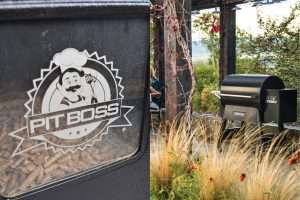
Electric and propane smokers are both simple, low-fuss ways to smoke meat without managing charcoal, pellets, or a wood fire. They look pretty similar, they’re usually affordable, and they both use wood chips or chunks to create smoke.
But, they don’t cook the same.
An electric smoker is easier to live with. A propane smoker gives you a live flame, more portability, and slightly better BBQ texture if you don’t mind managing the heat yourself. In this propane vs electric smoker comparison, I’ll walk through the real differences so you can decide which one actually makes sense for the way you cook.
Burning Brisket is reader-supported. When you buy through links on our site, we may earn an affiliate commission. Read our affiliate policy to learn more.
Quick Verdict
These cook very differently — electric is easier and more controlled, while propane is more portable and gives you a live flame to work with.
Choose an electric if:
- You want the easiest smoker to run
- You have an outdoor power outlet
- You mostly want simple, low-fuss smoking
- You want the cheapest running cost
- You’re happy with lighter smoke and softer bark
Choose a propane smoker if:
- You don’t have access to electricity
- You want something more portable
- You prefer cooking with a live flame
- You don’t mind checking and adjusting the temperature
- You want slightly better bark
Table of Contents
Quick Comparison: Propane vs Electric Smoker
If you just want the quick differences, this is the easiest way to see how they compare.
| Electric Smoker | Propane Smoker | |
|---|---|---|
| Best for | Easy, low-fuss smoking | Portable smoking without electricity |
| Effort required | Low | Moderate |
| Smoking flavour | Light smoke, softer bark | Slightly stronger smoke, better bark |
| Ease of use | Very easy, especially digital models | Easy, but more manual |
| Cooking capacity | Medium to large | Medium to large |
| Versatility | Smoking, some cold smoking | Smoking only |
| Fuel efficiency | Very cheap to run | Usually more expensive to run |
| Day-to-day use | Better for most people | Better for off-grid or portable use |
If you’re still debating fuel types, this guide on electric vs pellet smoker is worth a look as well.
Before You Choose: Both Are Still Basic Cabinet Smokers
Electric and propane smokers are both upright smoking boxes that use wood chips or chunks for smoke.
You’re not managing a charcoal fire. You’re not feeding splits into an offset. You’re not getting the same deep wood-fired flavor as a stick burner.
Both can make good BBQ. The real decision is about how you want to cook.
Electric is easier and more controlled. Propane is more independent because it doesn’t need electricity, but it asks more from you during the cook.
Propane vs Electric Smoker: Key Differences
Flavor and Smoke Quality
This is where propane has the edge, but I wouldn’t exaggerate the difference.
Both electric and propane smokers use wood chips or chunks to create smoke. So, the smoke source itself is very similar. You’re not burning logs or charcoal as your main fuel source.
But, propane has a live flame. That matters.
A propane smoker tends to dry the surface of the meat a little more, which can help with bark. It can taste a bit closer to charcoal smoking than electric does, although it’s still a much lighter style of BBQ.
Electric smokers make a softer, wetter style of smoked food. For fish, nuts, cheese, and more delicate foods, that can actually be a good thing. But, for brisket, ribs, and pork butt, I do find electric smokers can lack the bark and deeper BBQ texture I want.

So, yes, propane can make slightly better BBQ.
But, for most people buying this type of smoker, electric is probably good enough and a lot easier to live with.
How Much Work It Takes
Electric smokers are easier.
With a digital electric smoker, you plug it in, set the temperature, add your food, add wood chips, and let it run. You still need to top up the wood chips every so often, but the smoker manages the heat for you.

A propane smoker is more manual.
Most propane smokers don’t auto-regulate the temperature. You turn a dial to control how much gas is feeding the burner, then watch the temperature gauge and adjust as needed.
Once you learn where the dial needs to sit, it’s not hard. But, wind, cold weather, and door openings can all affect the temperature.
That’s the main trade-off.
Electric is more controlled. Propane gives you more independence from power, but you have to pay more attention.
Cooking Capacity
Electric and propane smokers are usually pretty similar for capacity.
Most are vertical cabinet-style smokers with racks inside, so they hold a decent amount of food without taking up a lot of floor space.
You can cook ribs, pork butt, chicken, sausage, fish, and even brisket in either. The limiting factor is usually the size and spacing of the racks, not the fuel type.

If you’re cooking for a family or small group, either type can work.
If you’re regularly cooking large briskets, multiple pork butts, or big batches of meat, check the rack width carefully. Some vertical smokers have plenty of listed square inches, but the racks can still feel awkward for larger cuts.
Heat Control and Consistency
Electric wins for heat control, especially if you buy a digital model.
You set the temperature and the smoker cycles the heating element on and off to hold it. It’s not perfect, but it’s simple and predictable.
Propane smokers are more old-school. You’re controlling the burner yourself with a dial. You’ll learn where the knob needs to sit for 225°F or 250°F, but it isn’t as simple as pressing a button.
The exception to the rule is the Masterbuilt ThermoTemp which has some temperature regulation, making it more similar to an electric smoker.

The other thing with propane is wind.
Because there’s a flame involved, cold and windy weather can make a propane smoker more annoying to manage. You may need to turn the burner up, shelter the smoker, or keep a closer eye on it.
Electric smokers can also struggle in cold weather if the element is underpowered or the cabinet isn’t well insulated. But, for normal backyard use, electric is still the easier option.
Versatility
Neither of these is especially versatile.
They’re both dedicated smokers. You’re not buying one because you want to sear steaks, grill burgers, or cook pizza.
Electric smokers do have one extra advantage though: some are useful for lower-temperature smoking and cold smoking setups. That makes them a better option for foods like fish, cheese, nuts, and jerky.
Propane smokers usually have a wider heat range, but they’re still not proper grills. The burner is at the bottom, the food sits higher up in the cabinet, and the whole design is made for smoking rather than direct grilling.
So, if you want one barbecue that can smoke and grill, I wouldn’t buy either of these.
I’d look at a pellet smoker, charcoal smoker, or kamado instead.
Learning Curve
Electric smokers have the easiest learning curve of almost any smoker.
That’s why they’re popular with beginners. You don’t have to learn fire management. You don’t have to light charcoal. You don’t have to adjust vents. You just need to learn how much wood to add, when to top it up, and how to cook meat to temperature instead of time.
Propane smokers are still beginner-friendly, but they do have a little more going on.
You need to learn how the burner dial responds, how weather affects the temperature, and how to avoid chasing the temperature every time you open the door.
The biggest mistake with propane is over-adjusting.
If you open the door and the temperature drops, don’t immediately crank the burner up. Shut the door and give it time to recover. If you keep turning the dial up and down, you’ll create bigger swings than you need to.
Fuel Efficiency
Electric smokers are usually cheaper to run.
They use a heating element, and once the cabinet is hot, they don’t need a huge amount of electricity to maintain smoking temperatures.
Propane costs depend on your local gas price, the size of your smoker, the burner output, and how long you’re cooking. But, in general, propane costs more to run than electric.
You’ll also need wood chips or chunks for either type.
The wood cost isn’t a huge deal. A bag of chips or chunks usually lasts a while because you’re only adding small amounts at a time. But, it’s still part of running both types of smoker.

What It’s Actually Like Cooking on Each
Cooking on an Electric Smoker
Electric smokers feel more like using a basic outdoor oven that happens to make smoke.
You plug it in, set the temperature, add your food, and let the heating element do the work. On a digital model, there’s not much to manage apart from the wood chips and the meat temperature.
That’s the best thing about them.
They’re calm. They’re predictable. They’re not exciting, but they’re very easy to use.
I’ve used electric smokers like the Masterbuilt Digital Electric Smoker, and they’re especially good when you want smoked food without making the whole cook a project. You can load ribs, chicken, fish, or pork inside and just keep things ticking along.

But, the results are different.
Food from an electric smoker tends to stay very moist. Sometimes too moist. The smoke profile is lighter, and you don’t usually get the same bark you’d expect from charcoal, pellets, or even propane.
That’s my biggest issue with electric smokers for bigger BBQ cuts.
For fish, I actually think electric makes sense. The softer heat and lighter smoke work well there. But, for brisket or pork butt, I don’t love the texture as much. It can taste fine, but it doesn’t give me that same BBQ finish I’m usually after.
You also still need to top up the wood.

A lot of people think electric smokers are completely hands-off, but they’re not quite that. Depending on the model and the size of the chip tray, you’ll probably be adding chips about every hour or so if you want steady smoke.
Still, that’s a lot easier than managing a live burner.
Cooking on a Propane Smoker
A propane smoker feels more manual.
You connect the propane tank, light the burner, adjust the dial, and wait for the smoker to come up to temperature. Once it’s hot, you add the meat, add wood chips or chunks, and keep an eye on it.
It’s not hard, but it’s less set-and-forget than electric.
Most propane smokers use an analog dial. You’re not setting an exact 225°F like you would on a digital electric smoker. You’re finding the burner setting that gets the cabinet sitting around the temperature you want.

Once you’ve used it a few times, you get a feel for it.
But, weather makes a difference. If it’s cold, windy, or wet, you may need a higher burner setting than you would on a warm calm day. The flame can be affected by wind too, depending on the design and where you’re cooking.
When you open the door, the temperature drops. That’s normal. The best thing to do is shut the door and let it recover. Don’t keep fiddling with the dial every time the gauge moves.
The advantage of propane is that it gives you a live flame without needing electricity.
That makes it useful for camping, cabins, events, or anywhere you don’t have a power outlet. It’s also why some people still like propane smokers even though electric smokers are easier.
Food from a propane smoker can have better bark than electric. It’s still a lighter smoke profile than charcoal or pellets, but the live flame helps dry the surface of the meat more than an electric element does.

But, honestly, I don’t think propane is the obvious buy it used to be.
If I had electricity available and wanted a simple smoker, I’d probably choose electric. If I wanted better BBQ flavor and still wanted convenience, I’d look at a pellet smoker before propane.
Propane only really makes sense to me when you specifically need the no-electricity setup.
Propane vs Electric Smoker: Which One Should You Choose?

Choose an electric smoker if:
- You want the easiest smoker to use
- You have outdoor power
- You want cheap running costs
- You don’t want to manage a live flame
- You’re happy with lighter smoke and softer bark
Skip an electric smoker if:
- You want strong smoke flavor
- You care a lot about bark
- You want to grill as well as smoke
- You don’t have power where you cook
- You want a more traditional BBQ flavor

Choose a propane smoker if:
- You don’t have electricity
- You want a smoker you can use off-grid
- You want something more portable
- You prefer cooking with a live flame
- You don’t mind manually adjusting the heat
- You want slightly better bark than an electric
Skip a propane smoker if:
- You want true set-and-forget cooking
- You don’t want to deal with propane tanks
- You smoke mostly at home near a power outlet
- You want the lowest running cost
- You’d rather buy a pellet smoker for better flavor and convenience
Buying Advice: What to Look For
For most beginners, I’d buy a digital electric smoker over a propane smoker.
It’s easier to run, easier to control, and cheaper to use. If you’re looking at this type of smoker because you want simple backyard smoking without much effort, electric fits that job better.
The main thing I’d look for is a digital control panel, decent rack space, and a wood chip system that doesn’t make you open the main door every time you need to add more wood.
I wouldn’t bother with an analog electric smoker unless it was extremely cheap. Digital models are affordable now, and the temperature control is the whole point of going electric.
For propane, I’d only buy one if you actually need what propane offers.
That means no electricity, more portability, or a preference for live-flame cooking. Otherwise, propane gives you more work without enough extra benefit to make it the obvious choice.
If you’re chasing better BBQ than electric can give you, I’d honestly look at pellet smokers before propane.
A pellet smoker gives you automatic temperature control like electric, but with better smoke, better bark, and more BBQ-style results. It costs more, but it makes more sense for most people who want both convenience and better food.
Also see:
Recommended Electric and Propane Smokers
If you’ve figured out which type suits you better, these are the smokers I’d start with based on budget and how serious you are about cooking.
Recommended Electric Smokers

A cheap, simple electric smoker that’s easy to run and good enough for low-fuss backyard smoking.
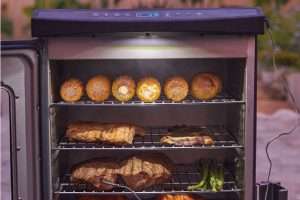
A slightly more practical electric smoker with a larger wood chip tray, which means less tops up during cooks.
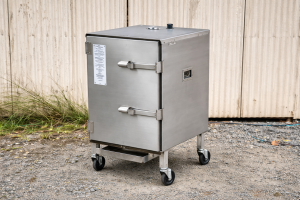
The electric smoker I’d look at if you want better quality and insulation than the usual budget electric boxes.
Also see the: Best Electric Smokers Under $300
Recommended Propane Smokers

The one I’d choose if you want better insulation, a viewing door, and a larger wood chip tray.
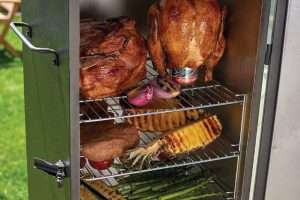
A basic propane cabinet smoker for someone who wants a straightforward, affordable gas option.
Final Thoughts
For most people, I’d buy an electric smoker over a propane smoker today.
Electric is easier to use, easier to control, cheaper to run, and good enough for the kind of low-fuss smoking most people want from this style of barbecue.
Propane can give you slightly better bark and a more live-fire cooking feel. But, unless you need a smoker that works without electricity, I don’t think propane is the obvious choice anymore.
If you want the easiest smoker, go electric.
If you need something portable or off-grid, propane still has a place.
If you want better BBQ flavor and still want convenience, I’d skip both and look at a pellet smoker instead.
FAQs About Propane vs Electric Smokers
Is a propane or electric smoker better?
For most people, an electric smoker is the better buy because it’s easier to use, easier to control, and cheaper to run.
A propane smoker can give you slightly better bark because it uses a live flame, but it also takes more attention. I’d only choose propane if you need portability or don’t have electricity where you want to smoke.
Do electric smokers make good BBQ?
Yes, electric smokers can make good BBQ, especially if you want simple, low-fuss smoked food.
They’re best for lighter smoke, moist meat, fish, sausage, jerky, and easy backyard cooking. But, they usually don’t create the same bark or deeper smoke flavor you get from pellet, charcoal, or offset smokers.
Are propane smokers hard to use?
No, propane smokers aren’t hard to use, but they are more manual than electric smokers.
Most propane smokers use a burner dial instead of digital temperature control. That means you need to watch the temperature and adjust the flame if the weather changes or the smoker starts running too hot or too cool.
Can you use a propane or electric smoker for grilling?
No, not really.
Propane and electric smokers are designed for low and slow smoking, not direct grilling. If you want to smoke and grill on the same barbecue, you’re better off looking at a pellet grill, charcoal smoker, or kamado.
Check out the best pellet smokers for grilling and the best kamado grills for more information about those.

Kate Brown is the founder of Burning Brisket, where she shares hands-on smoker reviews, barbecue gear guides, and practical tips for backyard BBQ. She has cooked extensively on charcoal, pellet, electric, and kamado smokers, using real-world experience to help beginners choose the right equipment and make better barbecue at home. Her focus is honest, straightforward advice that makes smoking and grilling easier without unnecessary complexity.