The Pit Barrel Cooker Classic is aimed at people who want proper charcoal-smoked barbecue without spending the whole cook adjusting vents and tending a fire.
After using ours regularly over several months, cooking a wide range of meats and testing it in different weather conditions, it has become one of our favorite charcoal smokers. It is extremely easy to use, holds far more food than its footprint suggests, and produces juicy meat with a distinctive charcoal-smoked flavor.
But it is also a very specific kind of smoker. You cannot fine-tune the temperature, it is not particularly good for grilling, and the bottom of longer hanging cuts can dry out or char slightly.
This Pit Barrel Cooker review covers what it is actually like to cook on, who it suits, and whether its lack of control is a worthwhile trade-off for such an easy cooking experience.
Burning Brisket is reader-supported. When you buy through links on our site, we may earn an affiliate commission. Read our affiliate policy to learn more.
Table of Contents
Quick Verdict
The Pit Barrel Cooker is one of the easiest ways to get genuine charcoal-smoked flavor without constantly managing a fire.
Once the charcoal is lit and the intake vent is set for your elevation, you hang the meat, close the lid, and largely leave it alone. It normally settles somewhere around 250–300°F and cooks faster than a typical low-and-slow smoker while still producing juicy, evenly cooked meat.
The trade-off is that you have very little control. There are no adjustable upper vents, no built-in temperature gauge, and no practical way to dial the heat up or down during a cook. It is also much better at smoking than grilling.
Buy the Pit Barrel Cooker if:
- You want set and forget charcoal flavor
- You regularly cook ribs, chicken, brisket, pork, or other hanging cuts
- You want a large usable capacity
- You prefer simple equipment with no electronics
- You are happy with a slightly higher temperature
Skip The Pit Barrel Cooker if:
- You want precise temperature control
- You enjoy adjusting vents and managing every stage of the cook
- You need one cooker to handle both smoking and high-heat grilling
- You frequently cook in heavy rain, strong wind, or snow
- You don't like the idea of hanging meat
Also available at: Walmart
At a Glance
Strengths
- Genuinely low-effort charcoal smoking
- Large hanging capacity
- Faster cooking than many traditional smokers
- Juicy meat with strong charcoal-smoked flavor
- Simple, durable construction
- Easy to assemble and clean
- No electricity required
- Reasonably easy to transport
Weaknesses
- Almost no temperature control
- No built-in temperature gauge
- Lowest part of hanging meat can dry or char
- Grilling grate sits a long way above the charcoal
- Temperature can drop in rain, strong wind, and snow
- Short one-year warranty
Best Use Case
The Pit Barrel Cooker is best for someone who wants to hang several racks of ribs, whole chickens, briskets, pork, or similar cuts and let the smoker handle most of the cook without repeated adjustments.
It is particularly well suited to people considering a pellet smoker because they want something easy, but who would rather have stronger charcoal flavor and avoid electronics.
What Is It Actually Like to Cook on the Pit Barrel Cooker?
The main thing that stands out when using the Pit Barrel Cooker is how little you have to do after the food goes in.
You fill the charcoal basket, light the coals, set the lower vent according to your elevation, hang or place the meat inside, and close the lid. Once it is running properly, you can genuinely go and do something else instead of checking the smoker every few minutes.
That simplicity is unusual for a charcoal smoker. There is no adding fuel every hour, repeatedly adjusting dampers, or chasing a precise temperature on a dial. The Pit Barrel simply runs at the temperature created by its fixed airflow and barrel design.

Most of our cooks settled somewhere between roughly 250°F and 300°F. It is generally hotter than traditional low-and-slow barbecue, so the food cooks faster, but the meat still comes out surprisingly moist.
The combination of hanging meat, natural convection, dripping fat, and juices hitting the charcoal creates a distinct flavor. The results are not just smoky. They have that richer charcoal flavor mixed with vaporized drippings and rendered fat.
Our results have been very juicy and evenly cooked overall. Baby back ribs have taken around three hours, chicken about two hours, tri-tip roughly 30 minutes, and a whole brisket around six hours.
When following timing guidance from Pit Barrel’s recipes, our cooks have generally fallen toward the longer end of the suggested range. That is one reason we strongly recommend using a meat thermometer rather than relying on time alone.

There is one important quirk when hanging long cuts such as ribs. The very bottom section sits closest to the charcoal and can become slightly dry or charred.
It has never ruined the whole rack for us, but it is noticeable. The rest of the meat stays moist and evenly cooked, while the lowest section receives more direct heat.
That is the main compromise of hanging food vertically above the fire. You gain a huge amount of capacity and very even cooking through most of the meat, but the lowest edge can cook harder than the rest.
How the Pit Barrel Cooker Works
The Pit Barrel Cooker is a steel drum with a charcoal basket at the bottom and a single air intake near its base.
Two steel rods sit across the top of the drum. Meat is attached to stainless steel hooks and hung from those rods directly over the charcoal.
Heat rises through the barrel and circulates naturally around the food. Meanwhile, fat and juices drip onto the hot coals, creating additional smoke and flavor.

Unlike most charcoal smokers, there is no adjustable exhaust vent at the top. The intake vent is set according to your elevation, and the smoker is then allowed to run at its natural temperature.
That means the Pit Barrel is not designed around choosing an exact cooking temperature. It is designed around creating the right environment automatically.
You do not tell it to run at exactly 225°F or 275°F. You light it correctly, set the vent, close the lid, and let the barrel do what it was designed to do.
Classic, Junior or PBX: Which Size Makes Sense?
The 18.5-inch Pit Barrel Cooker Classic is the original model and the version we used for this review. There is also a smaller 14-inch Pit Barrel Junior.

Pit Barrel Cooker Classic
The Classic is the best all-round size for most backyard cooks.
Its standard grate provides about 240 square inches of flat cooking space, but hanging food is where its capacity becomes much more impressive. It can hold up to eight full racks of ribs or roughly two to three whole briskets, depending on their size and how they are arranged.
That is a lot of food for a cooker that only occupies a relatively small area on the patio.
Pit Barrel Cooker Junior
The Junior is better suited to people who usually cook smaller quantities or want something easier to transport.
Its 14-inch grate is noticeably smaller, and it comes with fewer hooks, but it still provides the same basic hanging and convection-style cooking method.
Choose the Junior when trunk space, storage, or portability matters more than maximum capacity.
Performance Breakdown
Temperature Control
The Pit Barrel Cooker has almost no conventional temperature control.
There is one lower intake vent, which you set according to your elevation before cooking. Once the smoker is running and the lid is closed, it normally settles between approximately 250°F and 300°F.

You cannot simply turn a dial or make small vent adjustments to move between cooking temperatures.
That is either the Pit Barrel’s greatest strength or its biggest limitation.
Someone who wants a low-effort charcoal smoker may love not having to make adjustments. Someone who enjoys controlling every stage of a cook may find it frustrating.
We tested ours at or near sea level. We have not used it at higher elevations, but Pit Barrel provides different intake settings based on altitude. Following those recommendations should be important because the vent position determines how much oxygen reaches the charcoal.
Smoke and Flavor
The Pit Barrel produces a noticeably charcoal-driven flavor.
Because the meat hangs directly above the coals, juices and rendered fat drip onto the fire and vaporize. That smoke rises back around the meat and adds a flavor that is different from food cooked indirectly over a heat diffuser or water pan.
The smoker does not need a water pan to keep meat moist. Its enclosed barrel and natural convection help retain moisture while the faster cooking speed reduces the amount of time the food spends drying out.
The finished meat has consistently been juicy, smoky, and evenly cooked through most of the cut.

Capacity
The standard 18.5-inch grate only provides a moderate amount of flat cooking space.
But judging this smoker by the grate misses the point.
With eight hanging hooks, you can cook eight racks of ribs at once, or arrange multiple large cuts inside the drum without needing a large horizontal cooking chamber.
The tall barrel makes much better use of vertical space than a conventional grill or smoker.

A hinged grate is also available, allowing you to hang food on one side while cooking wrapped meat or smaller items on the flat surface beside it.
That setup can make the Pit Barrel more flexible, particularly when different foods reach the wrapping stage at different times.

Build Quality
The construction is basic, but there is very little that feels unnecessarily complicated or fragile.
The Classic is made from porcelain-enameled 18-gauge steel. The drum has welded handles, a lower air intake, a removable lid, a charcoal basket, hanging rods, and a simple stand.

There are no electronics, motors, digital controllers, or complicated moving parts.
The porcelain enamel helps protect the steel against rust and weather exposure, although using a cover is still sensible.
Its simplicity is part of its durability. There is not much to break, and the parts that do need regular handling—the hooks, rods, charcoal basket, and grate—are straightforward and solid.
Ease of Setup and Use
Assembly is unusually easy.
The smoker arrives as one large drum. You remove the contents, attach the horseshoe handle to the lid, place the barrel onto its stand, and complete the initial burn-in.
It even comes with the screwdriver and wrench needed for assembly.
The standard package includes:
- The porcelain-enameled drum
- Barrel stand
- Charcoal basket
- Two hanging rods
- Eight stainless steel hooks
- Standard grill grate
- Wooden hook-removal tool

Once assembled, operating it is equally simple. The biggest learning point is lighting the correct amount of charcoal and setting the lower vent properly.
Cooking in Rain, Wind, and Snow
Poor weather is where we have had the most trouble with the Pit Barrel Cooker.
The lid shape allows rainwater to pool on top. As the water collects, it cools the metal and can cause the temperature inside the drum to drop significantly.
Strong wind can also lower the cooking temperature.
When that happens, we have sometimes cracked the lid slightly to help the fire recover, even though opening the lid is not part of the normal operating instructions. The additional airflow can bring the temperature back up.
In snowy or very cold conditions, expect cooking times to increase.
The Pit Barrel still works in adverse weather, but it is not completely unaffected by the conditions. A sheltered position and a cover for storage are worthwhile if you regularly cook in rain or strong wind.

Grilling
The Pit Barrel Cooker includes a standard grill grate, but grilling is not what it does best.
The grate sits roughly 25 inches above the charcoal. That is much farther from the heat than a conventional charcoal grill, so it does not produce the same intense direct heat.
You can still cook burgers, steaks, sausages, or similar foods on it. We have also used a cast iron pan, which helps control flare-ups and keeps more of the juices with the food.

The results are acceptable for occasional grilling, particularly when you do not want to own a second barbecue.
However, anyone who grills frequently will probably want a dedicated grill or a drum smoker that provides better access to the charcoal.
Pit Barrel sells optional grill grates that improve the grilling setup. The shaped surface produces stronger sear marks and allows drippings to vaporize in the valleys.
Even with those accessories, though, the Pit Barrel remains a smoker first.
Cleaning
Cleaning is quick compared with many charcoal smokers.
After a cook, the hooks and grill grate need to be cleaned in the same way as other barbecue cooking surfaces. You also need to remove the ash from the bottom of the drum.
The optional ash pan makes that significantly easier. It attaches underneath the charcoal basket and catches falling ash, allowing the basket and ash to be lifted out together.
Without the ash pan, emptying the smoker is still manageable. You can tip or scoop the ash out, or use a shop vacuum once everything is completely cold.
The inside walls of the drum do not require regular scrubbing. Leaving the built-up seasoning in place helps protect and season the interior.

Using a Meat Thermometer
The Pit Barrel Cooker does not include a built-in temperature gauge, and you do not strictly need one to operate it.
However, we strongly recommend using a meat thermometer.
Because the smoker cooks faster than many low-and-slow cookers, relying only on traditional cooking times can lead to overcooked food. Meat size, starting temperature, weather, and charcoal lighting can all change the timing.
Our preferred setup has been a wireless thermometer such as the MEATER Plus. With no wires running under the lid or around the hanging rods, it fits the low-effort nature of the cooker.
A thermometer lets you leave the lid closed and remove the meat when it reaches the right internal temperature rather than guessing.
For other suitable options, see our guide to the best wireless smoker thermometers.
Portability
The Classic weighs around 57 pounds and is not a tiny cooker, but its one-piece design makes it fairly easy to move.
The stand separates from the drum, while the rods, hooks, grate, and charcoal basket can be stored inside during transport.
You will need to let it cool thoroughly before loading it into a vehicle. We would allow at least 30 minutes before placing it into the back of a truck, and longer before putting it into an enclosed car.
Its faster cooking speed is useful when taking it to another location because you do not necessarily need to commit to a 12-hour smoking session.
The smaller Junior is the better option when regular transport is a major priority.
What to Expect Before Buying
The Pit Barrel Cooker is simple, but it works differently from a conventional charcoal smoker.
Expect:
- The smoker to choose its own operating temperature rather than holding an exact number you set
- Most cooks to run between approximately 250°F and 300°F
- Food to cook faster than traditional 225°F barbecue
- Very little fire management once the lid is closed
- Strong charcoal flavor from fat and juices dripping onto the coals
- Large capacity when hanging food vertically
- The lowest part of ribs or other long cuts to receive more heat
- Cooking times to increase in cold, rainy, or windy weather
- Grilling to be possible, but less effective than on a dedicated grill
- A meat thermometer to be more useful than a built-in pit gauge
- Ash cleanup to be much easier with the optional ash pan
The Pit Barrel is not a precision smoker. It is a smoker for people who would rather trust the design and enjoy the food than control every airflow adjustment.

Pros and Cons
Pros
- Produces juicy meat with strong charcoal-smoked flavor
- Requires very little attention during a cook
- Cooks faster than many traditional smokers
- Holds up to eight racks of ribs in a relatively small footprint
- Simple and durable construction
- No electricity or digital controller required
- Easy to assemble
- Easy to clean
- More portable than many full-sized smokers
- Comes with the basic equipment needed to start hanging meat
Cons
- Very little control over cooking temperature
- No built-in temperature gauge
- Lowest part of hanging meat can dry out or char
- Standard grilling setup keeps food a long way above the coals
- Rain can pool on the lid and reduce the temperature
- Wind and snow can extend cooking times
- Ash pan and hinged grate cost extra
- One-year warranty feels short for such a durable smoker
Who This Is For (and Not For)
The Pit Barrel Cooker Is Best for:
- People who want easy charcoal smoking
- Anyone who regularly cooks ribs or chicken
- Buyers who want lots of hanging capacity
- People who prefer simple, hands-off cooks
- Anyone who wants charcoal flavor without electronics
Who should skip the Pit Barrel Cooker:
- Anyone who wants precise temperature control
- People who want strong direct-heat grilling
- If you like to cook small amounts of food
- Anyone who often cooks in bad weather
- People who enjoy actively managing the fire
Also available at: Walmart
Alternatives to Consider
If the Pit Barrel Cooker sounds close but not quite right, these are the alternatives I’d look at first. One gives you more control in a similar drum-style smoker, while the other gives you a more hands-off cooking experience with digital temperature control.
Oklahoma Joe’s Bronco
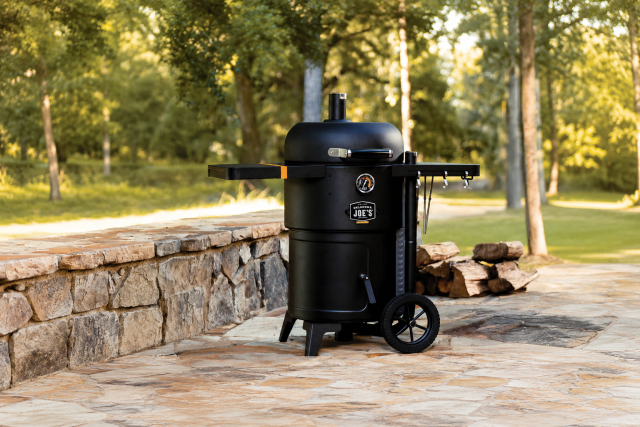
The Oklahoma Joe’s Bronco is the best alternative if you like the idea of the Pit Barrel but want more control over the cook.
It still gives you that charcoal flavor and hanging-meat setup, but you can adjust the temperature and it’s also better for grilling.
I’ve reviewed it in-depth in my Oklahoma Joe’s Bronco review.
Masterbuilt Gravity Series

The Masterbuilt Gravity Series is the better choice if you want a smoker that still feels fairly hands-off but gives more temperature control.
It uses charcoal with a digital controller so you can set a tempearture and let it run. I’d look at this over the Pit Barrel if you like convenience but don’t want to be locked into one temperature.
Read my full Masterbuilt Gravity Series review.
FAQs
Is the Pit Barrel Cooker actually set and forget?
It is about as close to set and forget as we have found in a charcoal smoker.
You still need to light the charcoal correctly, set the intake vent for your elevation, and monitor the meat’s internal temperature. But once the food is inside and the lid is closed, there is normally no need to keep adding fuel or adjusting vents.
Weather can change that. Strong wind, rain, or snow may require more attention and can extend the cooking time.
Is the Pit Barrel Cooker faster than a regular smoker?
Yes. The Pit Barrel usually runs between approximately 250°F and 300°F, which is hotter than traditional 225°F low-and-slow barbecue.
Our baby back ribs have taken around three hours, chicken about two hours, tri-tip roughly 30 minutes, and a whole brisket around six hours.
Exact times vary, so use internal temperature rather than the clock to decide when the meat is done.
Do you need to turn hanging meat?
We have not found it necessary to repeatedly turn hanging meat for even cooking.
The convection inside the drum circulates heat around the food and cooks most of the meat very evenly.
However, the lowest part of long cuts such as ribs sits closer to the charcoal and can become drier or more charred than the upper section.
Why does the Pit Barrel Cooker not use a water pan?
The Pit Barrel Cooker is designed to retain moisture without one.
The enclosed drum, lack of an adjustable top vent, faster cooking temperature, and natural convection all help prevent the meat from drying out.
Fat and juices also drip onto the charcoal, adding smoke and flavor as they vaporize.
Can you use a meat probe inside the Pit Barrel Cooker?
Yes, and we recommend doing so.
Wireless probes are particularly convenient because there are no cables to arrange around the hanging rods or under the lid.
A probe helps compensate for the lack of a built-in gauge and lets you monitor the meat without repeatedly opening the smoker.
Does the Pit Barrel Cooker need any modifications?
No. The standard package includes the charcoal basket, hanging rods, hooks, grate, and hook-removal tool required for normal cooking.
The most worthwhile optional extras are the ash pan, hinged grate, and cover.
The ash pan simplifies cleanup, while the hinged grate lets you hang food and use part of the cooking grate at the same time.
Final Verdict
The Pit Barrel Cooker is one of the easiest charcoal smokers we have used.
It holds a surprising amount of food, cooks faster than many traditional smokers, and produces juicy meat with a distinctive charcoal flavor. Once the fire is established and the lid is closed, it requires very little attention.
It is not the smoker to buy if you want to fine-tune temperatures or regularly grill over intense direct heat. You also need to accept that the lowest part of hanging meat can cook harder than the rest.
But for someone who wants simple, low-effort charcoal smoking with enough room to feed a crowd, the Pit Barrel Cooker remains one of our favorite options.
Also available at: Walmart

Jared Brown is a barbecue enthusiast with hands-on experience across a wide range of grills, smokers, and outdoor cooking setups. He enjoys testing different styles of barbecue and helping readers choose equipment that suits the way they actually want to cook, rather than chasing a one-size-fits-all answer. His practical, open-minded approach makes him a trusted voice for backyard cooks looking for honest guidance and better results.